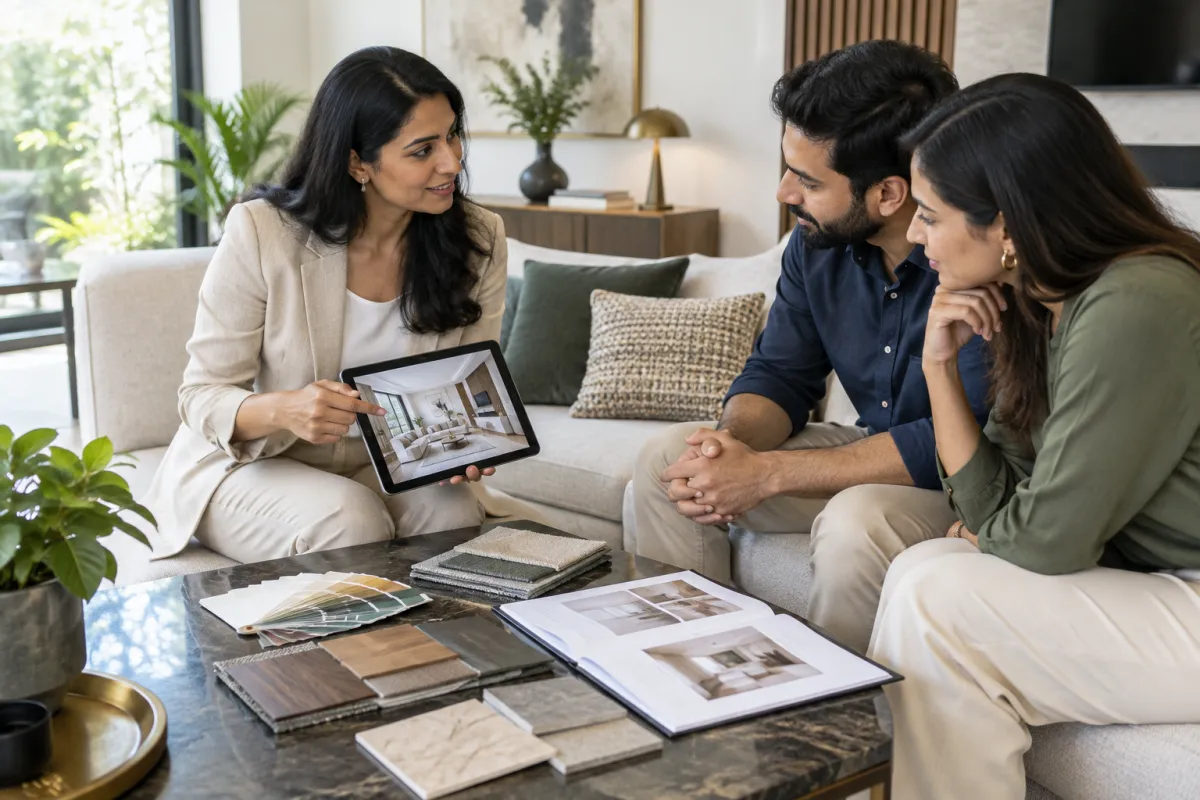
Interior designer website design is not about having the fanciest homepage. It is about helping a homeowner, shop owner or office manager feel confident enough to trust you with their space and their money. Interior projects are expensive and personal. Before anyone books a consultation, they want to know three things: can this designer do the style I want, will they manage the work properly, and will they stay close to my budget?
A website that answers those questions clearly will bring fewer "just asking the rate" enquiries and more serious clients with real projects. This guide is for interior designers, design-and-build firms, modular kitchen studios and turnkey contractors, whether you work in Khatima, Rudrapur, Dehradun or a big city.
What Clients Do Before They Call an Interior Designer
Most interior clients do not hire the first designer they find. A family planning a new home or a business owner doing up a showroom usually:
- Saves ideas on Instagram and Pinterest for weeks.
- Searches on Google for "interior designer near me" or "modular kitchen in Rudrapur".
- Opens several designer websites and compares portfolios.
- Asks friends or their builder for a recommendation, then looks that designer up online.
- Shortlists two or three firms and books meetings.
Your interior designer website design is often the deciding step between "shortlisted" and "skipped". If it looks outdated, loads slowly or only shows a few random photos, the client moves on, even if your real work is excellent.
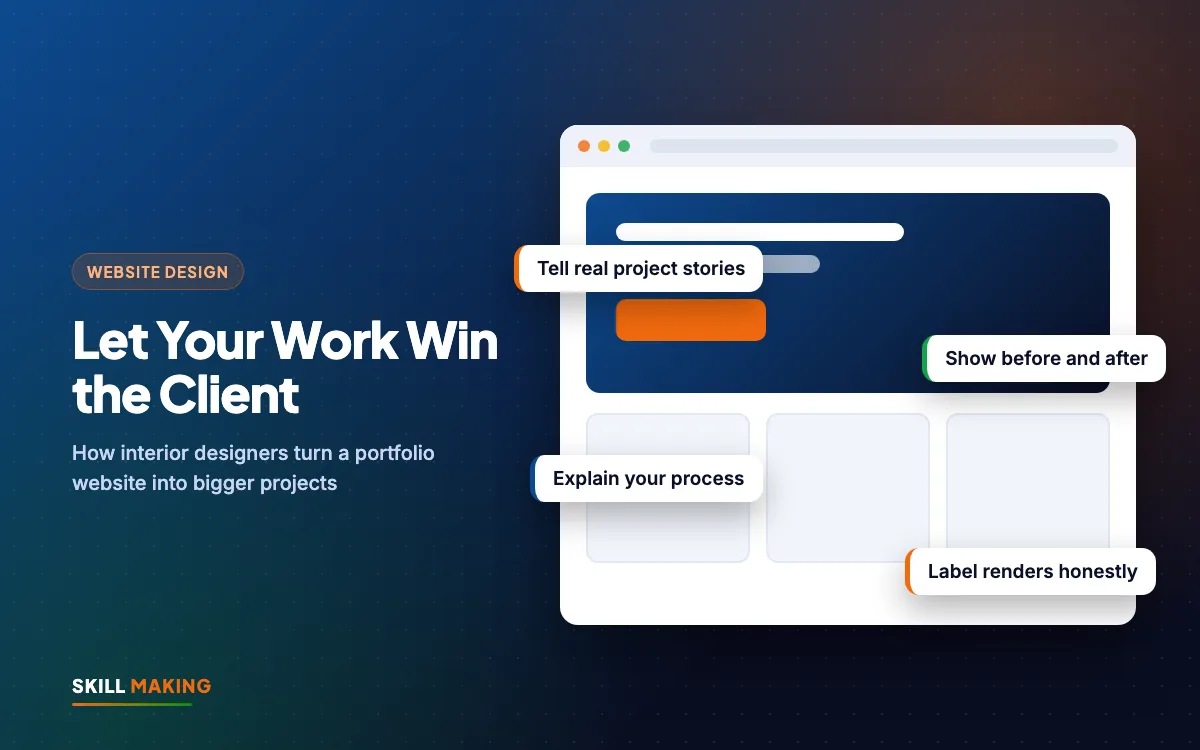
Interior Designer Website Design Starts With Project Stories
The biggest mistake designers make is treating the portfolio as a photo dump. Fifty pictures with no names, no context and no explanation do not help a client imagine working with you.
Instead, build each project as a short story. A good project page includes:
- Project title and type, such as "3BHK Home Interior, Rudrapur" or "Clinic Reception and Cabins, Haldwani".
- The brief. What the client wanted, their family size or business needs, and the style they liked.
- The challenge. A small kitchen, low light, an old house with damp walls, a tight timeline or a fixed budget.
- Your solution. The layout changes, materials, storage ideas, lighting and colour choices you made, and why.
- Before and after photos of the same angles.
- Scope and timeline. Which rooms you handled and roughly how long it took.
- A client comment, only if the client actually gave one and agreed to share it.
- A call to action: "Planning a similar space? Book a consultation."
Ten well-told projects do more for your reputation than a hundred unlabelled photos. Group them by type, such as homes, kitchens, offices, shops and clinics, so visitors can jump to what matches their need.
Before and After: The Most Convincing Proof
Interiors are about transformation. A bare cement room turning into a warm living space, or a cramped old kitchen becoming a clean modular one, tells your story better than any paragraph.
Tips for strong before and after sections:
- Take the "before" photos on the first site visit, every time. Make it a habit, because you cannot go back for them later.
- Shoot from the same corner and height for both photos.
- Use a simple slider or side-by-side layout so visitors can compare easily.
- Ask the client's permission before showing their home, and avoid showing personal items, family photos or the house number.
Real Photos vs 3D Renders: Be Honest
3D renders are a useful part of your work. They help clients see a design before money is spent. But clients feel misled when a website full of perfect renders turns out to contain very few finished projects.
Here is a simple, honest approach:
- Label every image clearly, such as "3D design" or "Completed project photo".
- Lead with real photos of finished spaces where you have them, even if they are less perfect than renders.
- Show renders next to the final result for the same room. This is powerful proof that what you design is what you deliver.
- Keep a separate "Design concepts" section for renders of projects not yet built.
- Never use stock images or another designer's work as your own. Clients and other designers do notice, and it destroys trust quickly.
This honesty is a selling point, and it is a part of interior designer website design that many firms get wrong. A client who sees the render and the real room side by side trusts you more than one who only sees glossy images.
Explain Your Design Process
Many people have never hired an interior designer before and are nervous about how it works. A clear process page calms that fear. Keep it simple, with one short paragraph for each stage:
- First consultation at the site or online, to understand needs, style and budget.
- Measurement and site survey.
- Concept and layout, with mood boards and space planning.
- 3D designs for key rooms, with revisions.
- Final drawings, material selection and quotation.
- Execution, with a timeline and a single point of contact.
- Handover and snag list, followed by after-sales support.
If you offer design-only, design-and-build or turnkey services, explain the difference here. Clients often do not know which one they need.
Pricing: Give a Clear Approach, Even Without a Rate Card
Interior budgets vary so much that a fixed price list is rarely possible. But saying nothing about money makes clients nervous and brings many enquiries from people who are not a fit. Share how you price instead:
- Explain whether you charge a design fee, a per square foot rate, a percentage of the project or a package price.
- Describe what changes the cost, such as materials, hardware brands, civil work and the number of rooms.
- Give a few example scopes, such as "complete 2BHK interiors" or "modular kitchen with wardrobes", and say that a quotation follows the site visit.
- Mention your consultation fee, if you charge one, and whether it is adjusted in the project.
The aim is not to commit to numbers online. It is to show you are transparent, which is exactly what clients want from someone handling a large budget.
Consultation Booking, Service Areas and Contact
Once a visitor is interested, the next step should be easy and obvious.
- A short consultation form: name, phone, project type (home, kitchen, office, shop), location, approximate size, timeline and an optional budget range. Send it straight to your WhatsApp and email.
- WhatsApp and call buttons on every project page, not only on the contact page. Many clients want to send a quick "can you do something like this?" message with a screenshot.
- Service areas page. List the towns and cities you work in, such as Khatima, Sitarganj, Rudrapur, Haldwani and nearby areas, and say whether you take projects outside them.
- Office or studio address with a map, and your hours, so clients can visit and see material samples.
Our guide to Google Business Profile explains how to appear on Google Maps for "interior designer near me" searches, and our local SEO checklist covers location pages.
Interior Designers vs Builders: What Each Website Should Show
Many firms do both design and construction. Kohli Builders and Designers in Khatima is one example; we built their website to present both sides of the business clearly. If you also build, your website must work for two kinds of visitors. Here is how big brands and specialist firms usually present their work compared with what we build for a small or mid-size firm:
Each project with photo gallery, floor plans and location
Brands like Godrej Properties and DLFA gallery of your real projects with before/after photos
Register interest or request a call-back on every project
Brands like Godrej Properties and DLFA quote form with project type and budget, sent to WhatsApp
Customer ratings next to every service
Platforms like Urban Company and CheckatradeYour Google reviews and licences shown clearly
Pick a service and book in a few taps
Platforms like Urban CompanyMobile-first pages with call and WhatsApp buttons
Brand names belong to their owners and are used only as examples of common website features. Skill Making is not connected with them.
For the construction side, our pages on website design for builders and website design for contractors and builders explain what to add, such as project galleries, floor plans and site-visit booking. For more ideas on getting leads from a construction website, read contractor website lead generation.
The Pages Your Interior Designer Website Design Needs
A clean structure helps both visitors and Google. For most firms, this is enough:
- Home: one strong line about what you do and where, your best three projects, process summary, reviews and a consultation button.
- Portfolio: projects grouped by type, each with its own story page.
- Services: full home interiors, modular kitchens, wardrobes, offices, shops, clinics, renovation.
- Process: the stages explained above.
- About: your story, team, qualifications and studio photos.
- Service areas: the towns you cover.
- Blog or ideas: helpful posts such as "how to plan a small kitchen" that attract searches.
- Contact and consultation booking.
Our checklist of pages every small business website needs goes into more detail, and how to write website content helps you write each page in simple words.
Mistakes That Cost Interior Designers Good Projects
- Huge uncompressed photos that make the portfolio painfully slow on phones.
- No project names, locations or descriptions, just a gallery.
- Only 3D renders, with nothing to show that you actually complete projects.
- Showing a client's home without permission, or with personal details visible.
- No hint of how you price, so every enquiry starts with "rate kya hai?"
- Contact details hidden on one page at the bottom.
- An Instagram link as the only portfolio, which serious clients may not want to scroll through.
Speed matters a lot for image-heavy sites. Our post on website speed and enquiries shows free ways to test and fix it.
What an Interior Designer Website Costs
For interior designer website design, most interior designers are best served by our Business package at ₹29,999, which includes up to 12 pages, custom design, lead tracking for calls, WhatsApp and forms, on-page SEO, Google Business Profile setup and a blog section. A new or solo designer can start with the Starter package at ₹14,999 (up to 5 pages, mobile-first, WhatsApp and enquiry form, basic SEO) and grow later. Prices are one-time and exclude GST. We write the content, and domain and hosting are bought in your own name.
See the website packages, the pricing page or the guide on website design cost in India. For designers in the USA, websites start from $300; our Miami, Florida page has a cost calculator.
Want a portfolio website that brings serious clients, not just "rate" questions?
Here are some websites we have built for builders, designers and other local businesses:
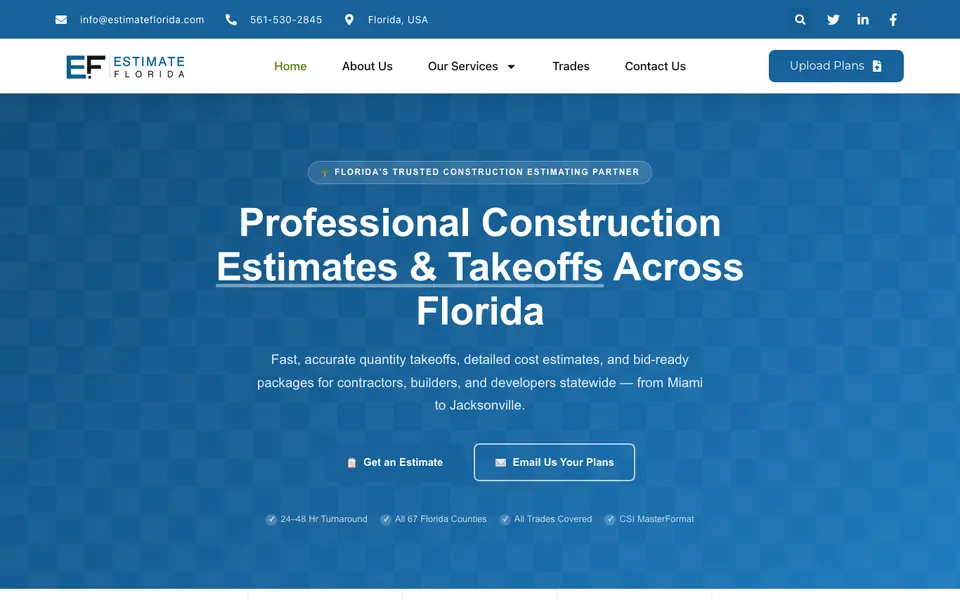
 Estimate Florida ConsultingConstruction estimating · Florida, USA
 6X PropertiesReal estate portal · Rudrapur, Uttarakhand
Getting More Project Enquiries After Launch
A website is the base. These steps help more of the right people find it:
- SEO for local searches such as "interior designer in Rudrapur" or "modular kitchen in Haldwani". See our SEO service.
- Google Ads for high-intent searches when you want enquiries quickly, through our Google Ads service.
- Instagram reels of finished projects and before and after walkthroughs, each linking back to the project page. Our social media service can help.
- Builder and architect referrals. Send partners a link to your portfolio instead of a heavy PDF.
- Follow-up. Interior clients take time to decide. Read why leads go cold and set up a simple follow-up routine.
What to Do Next
Open your website or portfolio on your phone and look at it as a new client would. Can you see a finished project story, a clear process, an honest idea of pricing and a consultation button within a minute? If not, you are probably losing bigger projects to a competitor who explains themselves better.
Ask for a free website audit and we will show you what to improve. Or request a free website plan and we will map out the interior designer website design, portfolio structure and booking flow that suits your firm and your town.