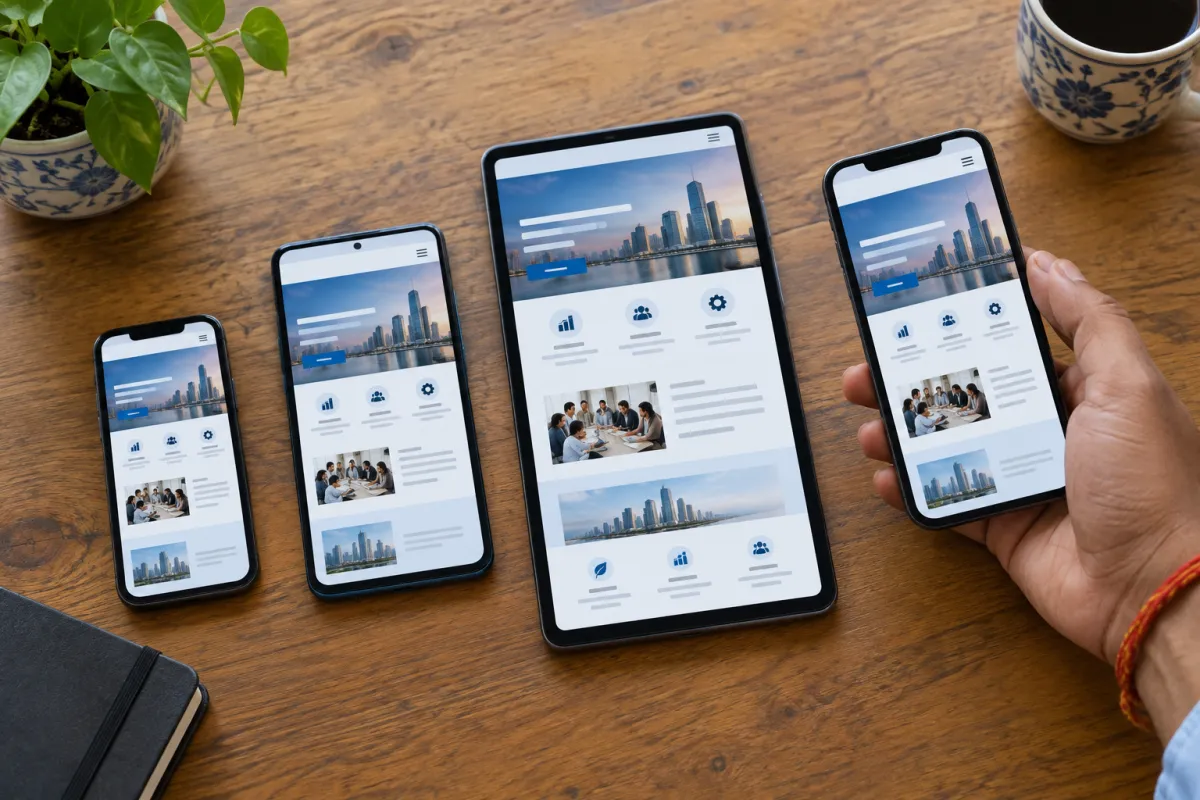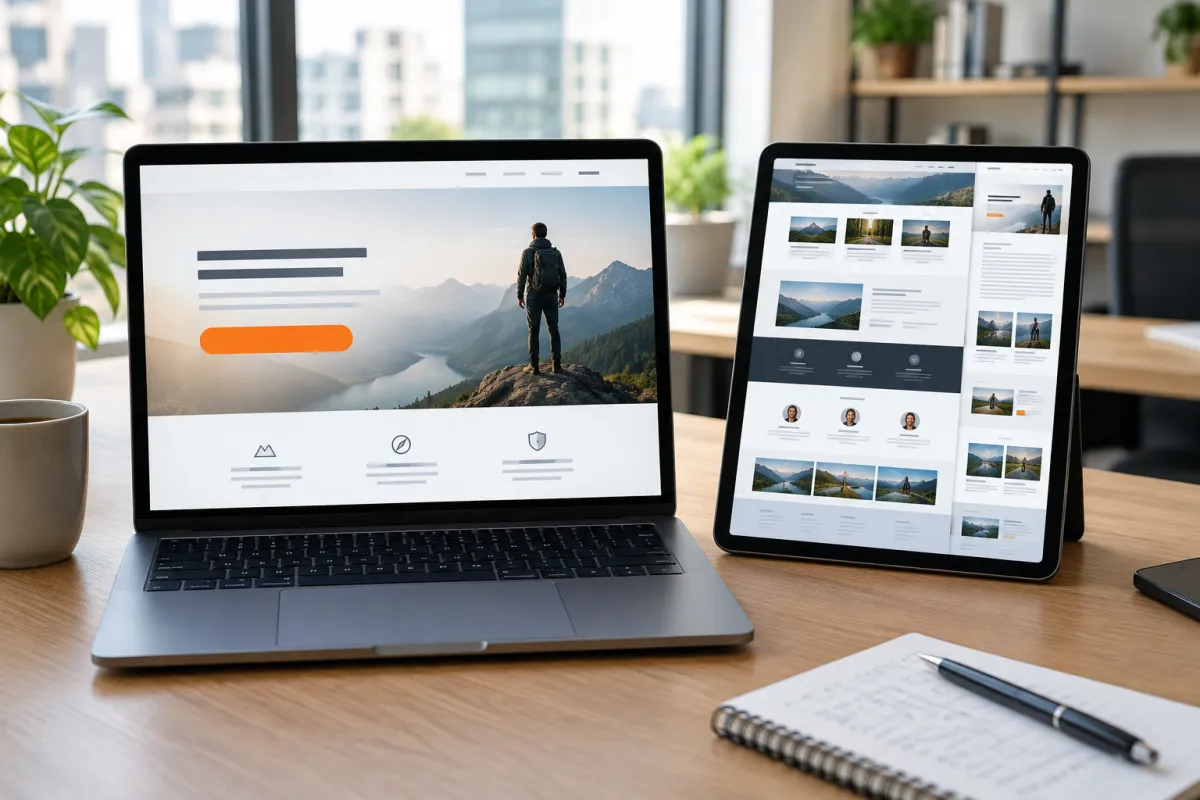
Landing page vs website is a question that usually comes up the week someone starts running ads. You have set a budget, the ad looks good, people are clicking, and yet the phone stays quiet. Very often the problem is not the ad. It is where the ad sends people.
This landing page vs website guide explains the difference in plain words, shows when a landing page beats a full website (and when it does not), and gives you a section-by-section plan for a landing page that turns paid clicks into calls and WhatsApp messages.
What Is the Difference Between a Landing Page and a Website?
A website is like your shop. It has many rooms: home, about, services, gallery, blog, contact. Visitors can wander, explore and learn about everything you do. It serves many people with many different questions.
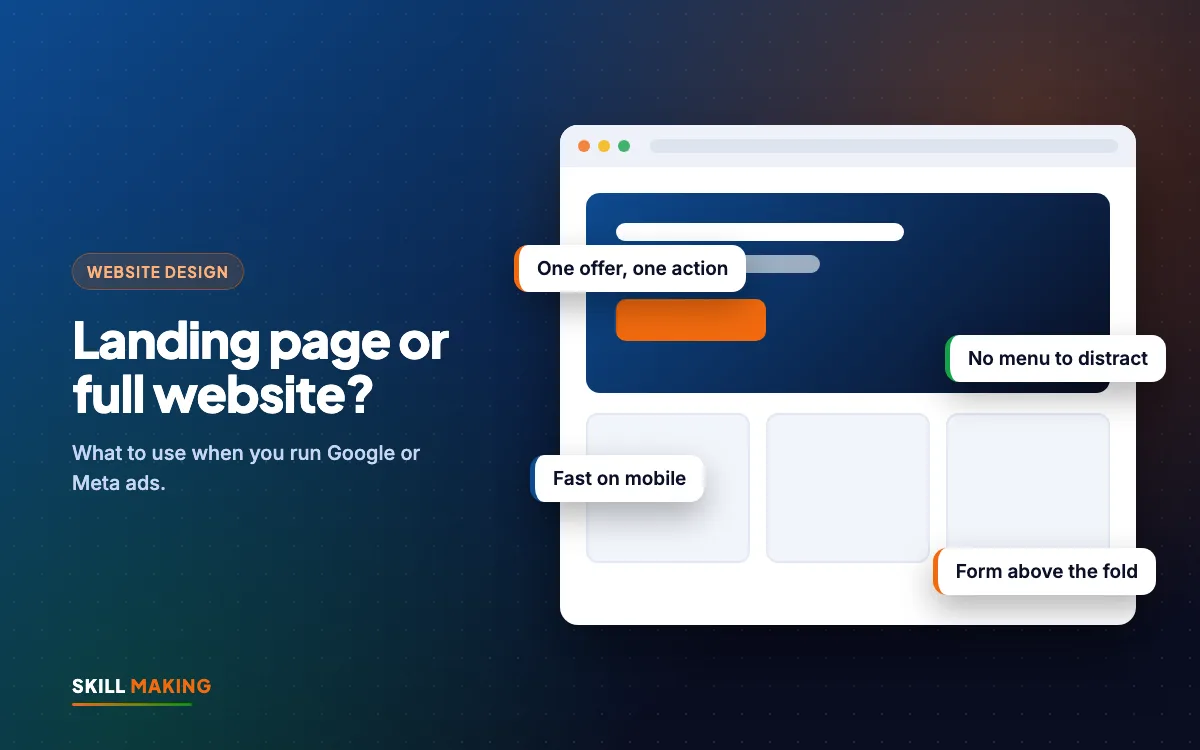
A landing page is like a single counter set up for one offer. It has one job: get the visitor who clicked a specific ad to take one action, such as call, WhatsApp, fill a form, or book a visit. There are few or no menu links, no distractions, and every line supports that one action.
Simple rule of thumb:
- Website: for people who want to know about you in general. Built for Google search, trust and long-term growth.
- Landing page: for people who clicked one particular ad about one particular offer. Built for a quick decision.
Why Sending Ads to Your Home Page Often Fails
Imagine a parent clicks an ad that says "Class 10 Board Exam Crash Course in Rudrapur, Batch Starts Monday". They land on your home page. It shows a slider about your founder, a welcome message, a menu with eight items, and news from last year's annual day.
The parent now has to hunt for the crash course. Most will not bother. They go back and click the next ad.
Home pages are general on purpose. Ads are specific. When the two do not match, you pay for the click and lose the visitor. The common problems:
- Message mismatch. The ad promised one thing, the page talks about everything.
- Too many choices. Menus, sliders and links pull attention away from the action you want.
- No clear next step. The WhatsApp or call button is hidden at the bottom.
- Slow loading. Home pages often carry the heaviest images and scripts. Our post on slow websites and enquiries explains why this hurts ads especially.
Landing Page vs Website: When a Landing Page Wins
Use a dedicated landing page when:
- You are running Google Ads or Facebook and Instagram ads for one specific service or offer.
- You have a time-bound offer: admission season, a festival discount, a monsoon roof inspection, a new batch.
- You want to measure exactly how many leads came from one campaign.
- You want to test two versions of the offer or headline against each other.
- Your main website is old or slow and a rebuild will take time.
Landing Page vs Website: When Your Full Website Is Enough
In the landing page vs website decision, a separate landing page is not always necessary. Your normal website pages can work well for ads when:
- You already have a strong, focused service page for exactly what the ad promotes, with a clear headline and a visible WhatsApp button.
- You are running brand-name search ads (people searching for your business by name). They want your main site.
- Your offer is broad and visitors genuinely need to browse, such as a restaurant menu or a product catalogue.
In fact, a well-built service page and a landing page are close cousins. The difference is mostly focus and fewer exits.
Landing Page vs Website: Side-by-Side
Here is how the landing page vs website choice compares on the things that matter for ads:
- Goal: a website builds trust and covers everything. A landing page gets one action from one audience.
- Navigation: a website has a full menu. A landing page usually has none, or just a logo.
- Content: a website covers all services. A landing page covers one offer in depth.
- SEO: a website is built to rank over time. A landing page is mostly for paid traffic and may not need to rank at all.
- Measuring results: a website gets mixed traffic, so results are harder to separate. A landing page makes it easy to count leads from one campaign.
- Lifespan: a website is permanent. A landing page may live only for a season or a campaign.
Here is how the visitor's path looks when the ad and the page match:
- Searches on Google“best clinic in your town”
- Opens your websiteFast and clear on mobile
- Sees photos & reviewsTrusts you in seconds
- Taps WhatsApp or CallThe enquiry reaches you instantly
- Visits and buysAnd comes back again
What to Put on a Landing Page That Converts
This is the part most people get wrong. A good landing page follows a simple order, top to bottom.
- Headline that repeats the ad. If the ad said "AC Repair in Tampa, Same-Day Service", the headline should say the same. The visitor must feel "yes, this is what I clicked on".
- One line on who it is for and where. "For homes and offices across Tampa and nearby areas."
- The main button, visible without scrolling. WhatsApp, call or a short form. On mobile, a sticky button at the bottom of the screen works well.
- Three to five benefits in bullets. What the customer gets, in their words, not yours.
- Proof. Real photos of your work, Google review snippets, years in business, certificates or logos of places you have worked (only real ones).
- The offer details. Price or starting price if you can share it, what is included, batch dates, timings, service area.
- Short FAQs. Answer the three or four doubts that stop people from contacting you: cost, timing, location, guarantee.
- A short form. Name, phone, and one question at most. Every extra field loses people.
- The button again at the end of the page.
- Basic trust details in the footer: business name, address or service area, phone number.
Keep the page short enough to read on a phone in under a minute, but long enough to answer the main doubts. For many local services that is roughly one to two phone screens of key content plus FAQs.
Landing Page Mistakes That Waste Ad Money
We see these again and again when we review ad accounts:
- Using the home page for every ad. One page cannot match every message.
- A long form asking for email, address, budget, and "how did you hear about us". Ask only what you need to call them back.
- No WhatsApp option for Indian audiences. Many people prefer to message rather than fill a form or call.
- Stock photos of people who are obviously not your team. Real photos, even simple phone photos, build more trust.
- Not tracking leads. If you do not know which ad brought which lead, you cannot tell what is working. Read cost per lead explained to understand this better.
- Forgetting follow-up. A form lead that waits two days for a call usually goes cold. Our guide on why leads go cold gives a simple fix.
What About Meta Lead Forms?
On Facebook and Instagram you also have a third option: Meta's instant lead forms, where people fill a form inside the app without ever visiting your site. These are quick and easy for the user, but leads can be lower in quality because filling them takes so little effort.
Many businesses test both: a lead form campaign and a landing page campaign, then compare the quality of leads, not just the number. We compare these in detail in Meta lead ads vs landing pages.
If you are unsure whether to start with Google or Meta at all, read Google Ads vs Facebook Ads first.
How to Measure Whether Your Landing Page Works
A landing page is only as good as the leads it brings. Track these simple things:
- Clicks from the ad (shown in your ads account).
- Leads from the page: form submissions, WhatsApp taps, call taps.
- Conversion rate: leads divided by clicks. Compare this between pages and over time rather than against an "industry number".
- Cost per lead: ad spend divided by leads.
- Lead quality: how many leads actually became paying customers.
Our Business website package includes lead tracking for calls, WhatsApp and forms, so you can see exactly which page and campaign is bringing enquiries.
Do You Need a Website at All If You Have a Landing Page?
So the landing page vs website question is not really either-or. For a short campaign, a landing page alone can work. But for most businesses, a landing page without a proper website is a weak position:
- People who are not ready today will search your name later. If they find nothing, you lose trust.
- Google Ads checks landing page quality and your business information. A thin one-page presence can limit you.
- You cannot build free search traffic with only an ad page. SEO needs a real site with service pages.
The best setup for most small businesses: a solid main website for trust and search, plus focused landing pages for each ad campaign. If you are not sure your site is ready for ads, we can check it for you.
How Much Does a Landing Page Cost?
A single landing page is usually much quicker to build than a full website, because it is one focused page. At Skill Making we often build landing pages as part of an ads setup, or include them within a website package.
For a full website in India, our packages start at ₹14,999 (Starter, up to 5 pages) and ₹29,999 (Business, up to 12 pages with lead tracking), one-time plus GST. For businesses in the USA, websites start from $300, and the Miami website design page has a cost calculator. See pricing for ads management and other services.
What to Do Next
Look at your current ads. For each one, open the page it sends people to on your phone and ask: does the headline match the ad? Can I tap WhatsApp or call without scrolling? Would a stranger trust this page in ten seconds?
If the answer to any of those is no, that is where your ad money is leaking. Ask us for a free audit of your ads and landing pages, or get a free website plan if you need a proper site built for both Google search and paid ads.