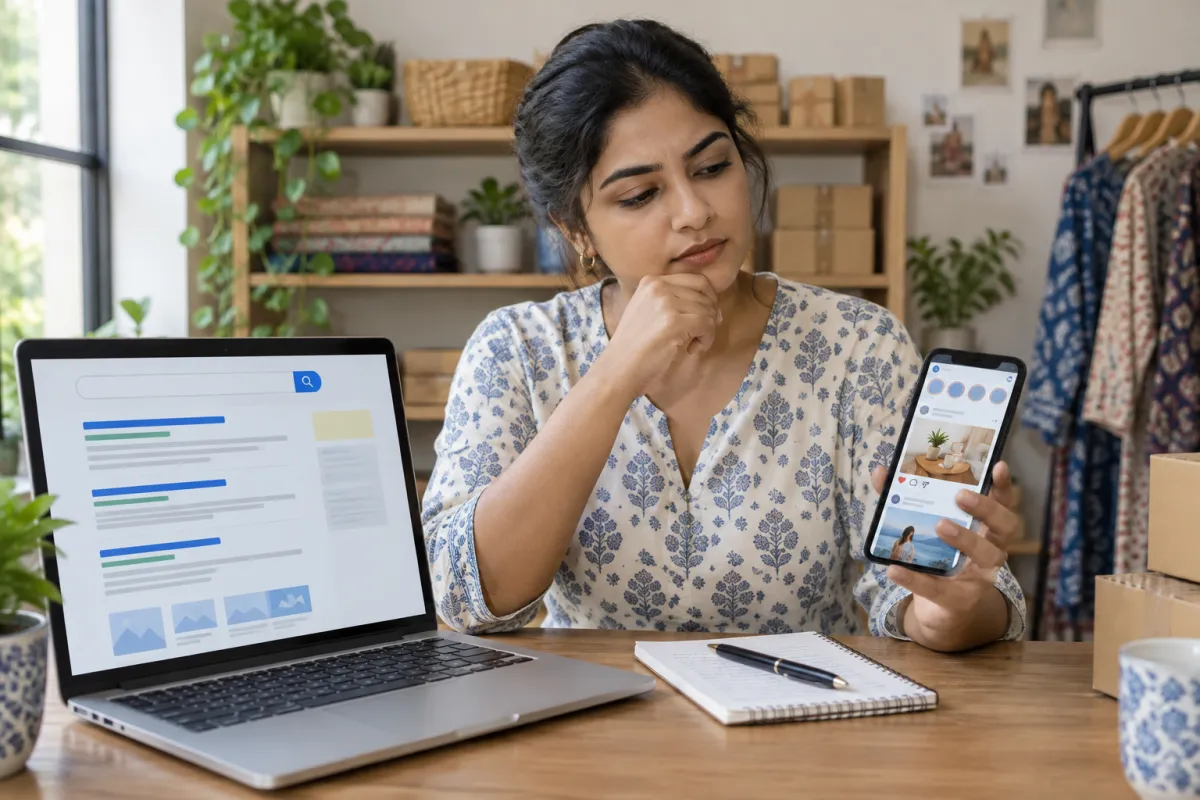
The question of Google Ads vs Facebook Ads comes up in almost every first meeting we have with a shop owner, clinic or contractor. Someone has told them "you must run ads", and now they want to know where the first ₹10,000 should go. The honest answer is: it depends on whether your customers are already searching for you, or whether you need to put your offer in front of them.
This post will not tell you one platform is always better. It will give you a clear way to decide, a simple test plan, and a list of mistakes that waste money on both.
The one difference that matters most
Think of two kinds of customers.
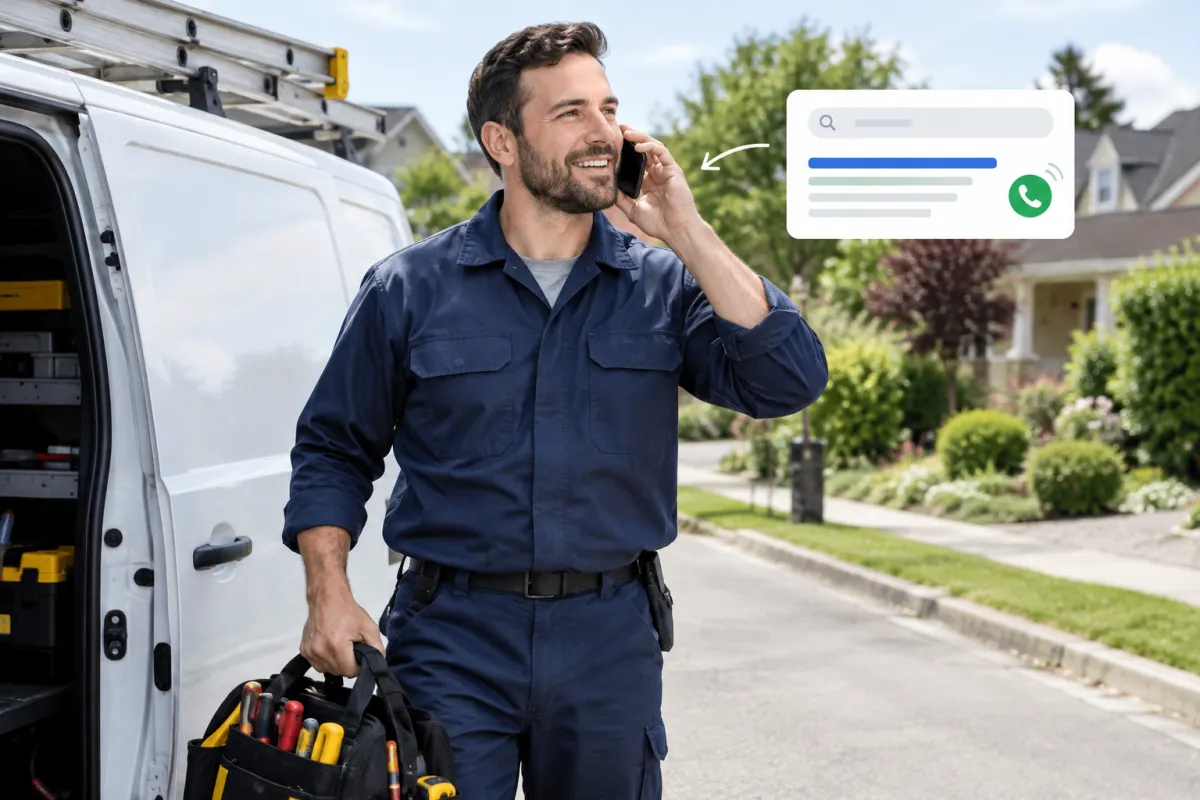
- The searcher. Their AC stopped working at 10 pm. They pick up the phone and type "AC repair near me". They want someone today.
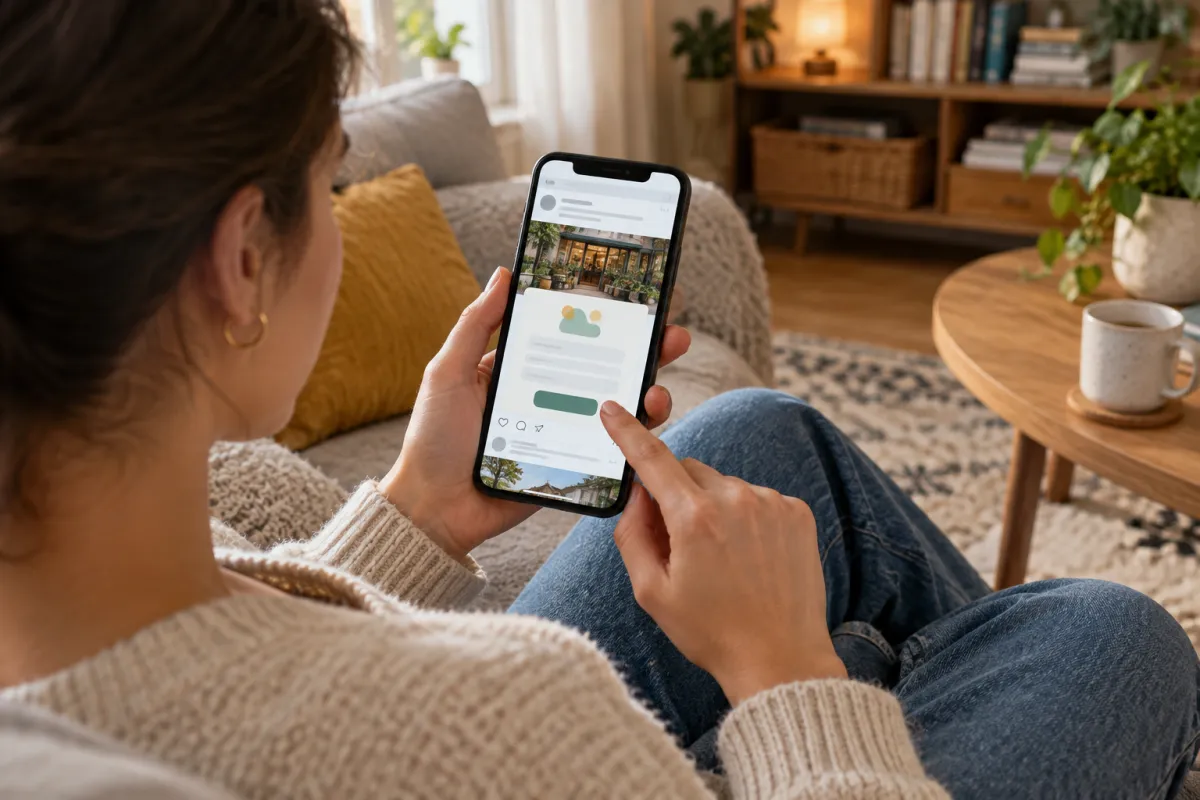
- The scroller. They are watching reels in the evening. They are not thinking about a new kitchen, a coaching class or a café, until they see one that looks good.
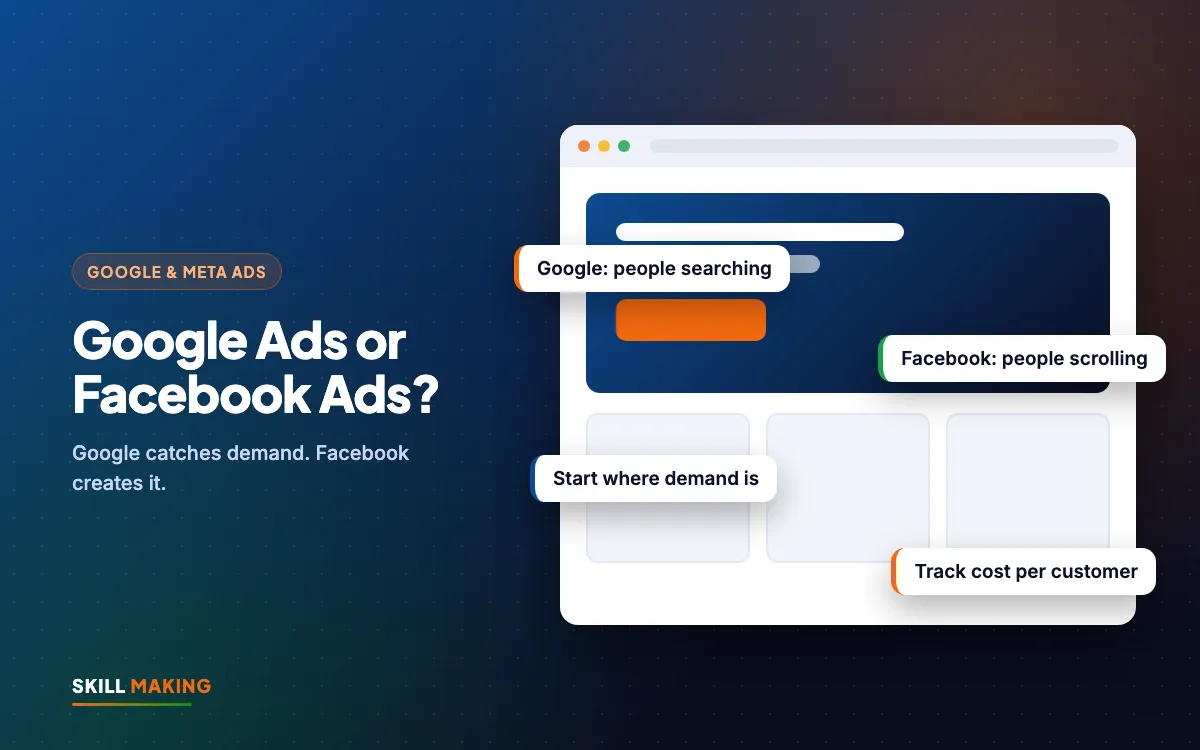
Google Ads mostly reach the searcher. Facebook and Instagram ads (both run through Meta) mostly reach the scroller. That one idea answers most of the Google Ads vs Facebook Ads question.
- If people already search for what you sell, Google usually brings faster, ready-to-buy enquiries.
- If people do not search for it, but would want it when they see it, Meta ads are usually the better start.
How Google Ads work, in plain words
On Google you choose keywords, the words people type. When someone searches those words in your area, your ad can appear at the top with a "Call" button or a link to your page.
Key points:
- You pay mostly when someone clicks or calls, not just when they see the ad.
- You can show ads only in your city, or within a few kilometres of your shop.
- You can show ads only during your working hours.
- The person already has a need, so the enquiry is often more serious.
The downside: some keywords are competitive, so clicks can cost more. And if few people search for your service, there is not much to buy. Our Google Ads service page explains how we set this up for local businesses.
How Facebook and Instagram ads work
On Meta you do not choose words. You choose people: their location, age range, interests and behaviour. Then your ad appears in their feed, stories or reels while they scroll.
Key points:
- Clicks and views are often cheaper than on Google.
- The ad must stop the scroll. A plain photo with "Best service in town" rarely works.
- Pictures and short videos matter a lot. Food, interiors, before-after work and happy students all do well.
- People are not in "buying mode", so many enquiries are softer and need follow-up.
Meta also has lead forms that open inside the app. They are easy for the customer but can bring casual leads. We compare these in detail in Meta Lead Ads vs Landing Pages. See our Facebook and Instagram ads service for how we run campaigns.
Google Ads vs Facebook Ads: a quick comparison
Here is a side-by-side view of the two platforms for a small business:
Store locators with address, map and timings for every outlet
Brands like Domino’s and TanishqA page for your town + Google Business Profile with map and timings
Click-to-call and chat on their pages
Brands like TanishqWhatsApp and call buttons on every screen
Doctor profiles and online appointment requests
Brands like Apollo HospitalsAn enquiry or booking form that lands on your WhatsApp
Ratings and reviews right where people decide
Brands like AmazonYour best Google reviews shown on your website
Brand names belong to their owners and are used only as examples of common website features. Skill Making is not connected with them.
In short:
- Intent: Google is high (they are searching). Meta is lower (they are browsing).
- Speed to a sale: Google is usually faster for urgent services. Meta builds interest over days or weeks.
- Creative needed: Google needs clear text and a good landing page. Meta needs strong photos or video.
- Best for: Google suits repairs, clinics, lawyers, contractors, coaching searches. Meta suits restaurants, cafés, fashion, events, new launches, real estate projects and offers.
Which businesses should start with Google
Start with Google if people search for your service with a clear need. Examples:
- Plumbers, electricians, AC and HVAC repair, roofers and painters
- Dentists, eye clinics, physiotherapy and diagnostic labs
- Packers and movers, pest control, car repair and body shops
- CA, legal and visa consultants
- Coaching for a specific exam, such as "IELTS coaching in Rudrapur"
For these businesses, one good call can pay for many clicks. If you are a contractor, our guide on Google Ads for local service businesses walks through the full setup.
Which businesses should start with Meta
Start with Facebook and Instagram if your product sells through the eyes, or if people do not search for it by name. Examples:
- Restaurants, cafés, bakeries and cloud kitchens
- Boutiques, salons, gyms and wedding services
- New real estate projects and interior designers
- Schools during admission season, summer camps and workshops
- Online stores with products that look good in a reel
A café in Haldwani is rarely "searched" by name until people know it. A ten-second reel of the coffee being poured, shown to people within a few kilometres, can do more than any keyword.
When you should run both
Many businesses end up using both, because they do different jobs.
- Meta creates interest. People see your work, your space, your offer.
- Google captures the search. Later, when they need it, they search and find you again.
A school might run Instagram reels about campus life in January, and Google search ads for "best CBSE school near me" in March. A painting contractor might show before-after reels on Meta and run Google ads for "house painting near me" all year.
But do not start with both if your budget is small. Split ₹10,000 into two and each platform gets too little data to learn. Start with one, learn, then add the second.
A simple 30-day test plan
Use this plan to answer the Google Ads vs Facebook Ads question with your own numbers, not someone's opinion.
- Fix your landing spot first. Make sure your website or landing page loads fast on a phone and has a WhatsApp and call button. If you do not have one, see how to get a website.
- Pick one platform using the sections above. Searched service: Google. Visual or unknown product: Meta.
- Pick one offer. "Free inspection", "first class free", "10% off weekday lunch". One clear offer, not five.
- Set a small daily budget you are comfortable losing while you learn. Keep it the same for the full month.
- Track every enquiry. Note each call, WhatsApp and form, and where it came from. A simple notebook or sheet is enough.
- Check twice a week, change little. Remove keywords or ads that bring junk. Do not restart the campaign every two days.
- At day 30, calculate cost per lead and cost per customer. Our cost per lead guide shows how.
- Decide. If the numbers work, increase the budget slowly. If they do not, fix the offer or page, or try the other platform.
Budget: how much should you start with?
There is no magic number, but a few rules help:
- Your budget should allow enough clicks or leads in a month to learn something. If a click costs ₹40 and you spend ₹1,000, you get very few chances.
- Ask: "How much is one new customer worth to me over a year?" A dentist or roofer can afford more per lead than a tea stall.
- Keep money aside for the website or landing page. Ads sending people to a weak page waste money on any platform.
Here is a simple way to see how a few extra customers can pay back what you spend:
pays for the whole website
After that, every customer the website brings is extra income — month after month.
One-time website price; domain and hosting are about ₹2,500–₹6,000 a year extra.
Google Ads vs Facebook Ads: mistakes that waste money on both
These waste the most money, whichever side of Google Ads vs Facebook Ads you choose:
- Sending ads to your home page instead of a page about that one service.
- No way to contact on mobile. No WhatsApp button, no tap-to-call.
- Not replying fast. Many leads go cold within hours. Read why leads go cold for a fix.
- Targeting the whole state when you serve only a few towns.
- Using the "Boost" button and calling it advertising. We explain why in Stop Wasting Money on Boosted Instagram Posts.
- Judging by likes or clicks instead of calls and customers.
- Changing everything every day. Both platforms need a little time to learn.
What we usually recommend
For most local service businesses in India and Florida, our answer to Google Ads vs Facebook Ads is usually the same. We suggest:
- Start with Google search ads for your main service in your area.
- Set up your Google Business Profile at the same time, because it shows up for free next to the ads.
- Once leads are steady, add Meta ads to show your work and offers to nearby people, and to remarket to website visitors.
For restaurants, cafés, shops and launches, we often flip it: Meta first, Google later. If you run a home-service business in the USA, our Miami website design page explains what a lead-ready site costs (websites start from $300).
What to do next
Write down your top service, your area, and what one customer is worth to you. That alone will tell you which platform to try first. If you want a second opinion, ask for a free marketing audit and we will look at your website, Google profile and current ads, and tell you honestly where your first rupee should go. Check our pricing to see how ad management works with us.