If you want more commercial exterior painting projects in Miami, here is the uncomfortable truth: by the time a bid invitation lands in your inbox, the building has often already decided who it trusts. The property manager has a short list in mind. The engineer who wrote the scope has worked with a few painters before. The board has heard one or two names at a meeting.
So this guide does not start with "how to write a better bid". It starts much earlier, at the moment a Miami building first realizes it will need a repaint. If you are known at that moment, the bid becomes a formality. If you are not, you are usually competing on price against everyone else who found the same listing.
This is written for painting contractors in Miami-Dade and nearby Broward who already do good residential or light commercial work and want bigger, steadier jobs: condo towers, office buildings, retail plazas, hotels, warehouses and HOA communities.
The Repaint Clock: When a Miami Building Starts Looking for a Painter
A commercial repaint is rarely a surprise. It follows a predictable path, and every step is a chance for you to be noticed. Watch the dot move around the clock below.
Here is what happens at each step, and what you can do there:
- The weather does its work. Miami's sun, salt air, heavy rain and storms are hard on exterior coatings. Paint chalks and fades, sealants crack and stucco develops hairline cracks that let water in.
- Someone writes it down. A building inspection, a maintenance walk or a reserve study notes the condition of the paint and waterproofing. For many condo buildings, Florida's newer condo safety rules mean these reviews happen on a schedule rather than when something fails.
- The money gets planned. The owner, asset manager or condo board puts the repaint into a budget year. This can happen a year or more before any painter is called.
- The scope gets written. On bigger jobs an engineer or consultant writes a specification: surface prep, crack repair, primer, coating system, colors and warranty. On smaller jobs the property manager writes a short scope.
- A few contractors are invited to bid. This is where most painters first appear, and where price pressure is highest.
- The contract is signed and the work is scheduled, often around the rainy season and hurricane season, because wet weather slows exterior work.
Most painters only show up at step 5. The ones who win steadily are known at steps 2, 3 and 4. The rest of this guide shows how to get there.
Why Miami Is a Special Market for Commercial Exterior Painting
Before we get to the plan, it helps to understand why the Miami market behaves the way it does.
- The climate keeps the work coming. Coastal buildings need regular exterior maintenance, and painting is often bundled with waterproofing, sealant replacement and stucco or concrete repair.
- Condo rules changed after 2021. After the Surfside collapse, Florida added milestone structural inspections for older condo buildings of three or more stories and required many condo associations to complete structural integrity reserve studies. Those studies cover items such as waterproofing and exterior painting, which pushes repaints into planned budgets. Rules and deadlines have been updated more than once, so always check the current Florida statutes and Miami-Dade requirements before quoting them to a client.
- Local recertification matters too. Miami-Dade County runs its own building recertification program, and the repairs it brings up often lead to coating work afterwards.
- Decisions are made by committees. Boards, managers, engineers and owners all have a say. You need to be known, and trusted, by more than one person.
- The city is bilingual. Many property managers, board members and crews work in Spanish as well as English. Materials in both languages are a real advantage.
Who Hands Out Commercial Exterior Painting Projects in Miami
"Commercial clients" is not one audience. There are at least six different people who can put your name on a bid list, and each one cares about different things.
- Property management companies manage many buildings at once. They want painters who show up, communicate well, protect residents and finish on time. One good relationship can lead to work across several properties.
- Condo and HOA boards are volunteers spending their neighbors' money. They want clear proposals, proof you have done similar buildings, proper insurance and no surprises.
- General contractors need reliable painting subcontractors for new builds and renovations. They care about schedule, safety records, manpower and clean paperwork.
- Restoration and waterproofing firms often handle concrete repair, balconies and sealants, and then need a painting partner to finish the job. This is one of the most overlooked sources of steady work.
- Facility managers at retail plazas, hotels, offices, schools and warehouses want minimal disruption to customers and tenants, with work at night or on weekends if needed.
- Public agencies such as Miami-Dade County, cities and school districts publish formal bids through their procurement systems. This work is paperwork-heavy but steady.
You do not need to chase all six at once. Pick two that match your crew size and equipment, and go deep.
Step 1: Pick a Lane and Say It Clearly
A painter who says "we do everything" sounds like a residential company trying commercial for the first time. Decide what you are best at, for example:
- Mid-rise condo and HOA repaints with waterproofing
- Retail plazas and office buildings with night work
- Warehouses and industrial buildings with large wall areas
- Painting partner for restoration contractors
Then say it everywhere: on your website, your Google Business Profile, your LinkedIn page, your truck and your capability statement. Being known for one thing is how referrals happen.
Step 2: Build a Bid-Ready Website for Commercial Clients
Before a property manager invites you to bid, they will look you up. Usually they want to see, within a minute or two, that you can handle a building like theirs. A website built for homeowners does not answer their questions.
What a commercial client checks for:
- A separate commercial section, not a gallery of kitchens and bedrooms. Show projects by building type: "Condo towers", "Retail plazas", "Warehouses".
- Project pages with real details: building type, area or number of floors, scope (pressure washing, crack repair, elastomeric coating, sealants), timeline and photos from before, during and after. Ask clients' permission before naming them.
- Coating systems you work with, written in plain words, and any manufacturer training or warranty programs you actually hold.
- License and insurance details, with a simple "Request our certificate of insurance" button. Miami-Dade County issues its own certificate of competency for painting contractors, and some cities have extra requirements, so show the ones you hold.
- Safety and equipment: swing stages, boom lifts, safety training you really have, and how you protect residents, cars and landscaping.
- A one-page capability statement as a PDF download: services, crew size, equipment, insurance, references and contact details.
- An "Invite us to bid" form asking for the property address, scope, deadline and the documents they can share.
- English and Spanish versions of your key pages, if your team can serve clients in both.
Our page on website design for painting contractors shows how we lay this out, and you can see real projects we have built.
Step 3: Be Found When They Search
Property managers and facility managers do search Google, especially when their usual painter is booked or has let them down. Make sure you show up:
- Google Business Profile: set your primary category correctly, list commercial services, add photos of commercial jobs and ask commercial clients for reviews. Our guide to Google Business Profile walks through the setup.
- Service pages for each lane and area: "Condo painting in Miami Beach", "Commercial painting in Doral", "Warehouse painting in Hialeah". Each page should have real content and photos, not the same text with a new city name.
- Search ads for high-intent searches such as "commercial painting contractor Miami", sent to your commercial page, not your home page. Our Google Ads service can set this up with a budget you control.
- SEO that builds over time. Project pages and helpful articles keep bringing visitors for years. See our SEO service if you want help with this.
Step 4: Get in the Room Before the Bid
This is the part most painters skip, and it is where the Repaint Clock is won.
- Join the groups where property managers and boards meet. Local chapters of associations such as CAI (community associations), BOMA (commercial building owners and managers) and IREM (real estate managers) hold events and trade shows. Go regularly, not once.
- Teach instead of selling. Offer a short, free talk for a management company or a board: "How to plan an exterior repaint in Miami" or "What to put in a painting scope". Boards remember the contractor who helped them understand the process.
- Offer free condition walk-throughs. A short written report on the paint, sealants and visible cracks, with photos, is useful to a manager planning next year's budget. When the job is funded, you are the obvious name to invite.
- Partner with engineers and restoration firms. Introduce yourself to consultants who write specifications and to concrete restoration companies who need a painting partner. Be reliable on one job and they will call you again.
- Register as a vendor for public bids. If you want public work, register with Miami-Dade County's procurement system and the cities you serve, and check whether you qualify for the county's small business certification programs.
Step 5: Follow Up Like a Business, Not a Painter
Commercial work has a long cycle. A walk-through today may turn into a job next year. Without a system, those leads are forgotten.
- Keep every contact in a simple CRM: the building, the decision makers, the last conversation and the next step.
- Set reminders by budget season, not just by week. Ask managers when their buildings plan next year's budgets and follow up before that date.
- Ask why you lost. After a lost bid, ask politely what made the difference. The answers will improve your next proposal.
- Send useful updates, such as "Five things to check before the rainy season" or before-and-after photos from a recent project.
Our AI automation service can set up these reminders and follow-up messages for you, so no lead goes cold.
A 90-Day Plan to Win Commercial Exterior Painting Projects in Miami
Here is how to turn this guide into action over the next three months:
- Days 1 to 15: Choose your one or two lanes. Collect photos and details from your five best commercial or multi-unit jobs. Ask for permission to show them.
- Days 16 to 45: Build or rebuild your commercial pages: project pages, capability statement, insurance request button and invite-to-bid form. Update your Google Business Profile.
- Days 46 to 60: Make a list of 30 property management companies, restoration firms and general contractors in your area. Introduce yourself with your capability statement and one relevant project.
- Days 61 to 90: Attend at least one association event, offer two free condition walk-throughs, and set up follow-up reminders for every contact.
At the end of 90 days you will not just be waiting for bids. You will be known by the people who write them.
Common Mistakes That Keep Painters Out of Commercial Work
- Showing only residential work on the website and social media.
- Bidding on everything instead of building relationships in one or two lanes.
- Slow or messy paperwork, such as late insurance certificates or unclear proposals.
- No follow-up after a walk-through or a lost bid.
- Competing on price alone, when boards and managers mostly want reliability and fewer problems.
Here Is Proof This Approach Works
One of our clients, Markone Contractors, a roofing, concrete and painting company in South Florida, came to us for a website, SEO and ads. The new website presented their work clearly to the people searching for it, and the client told us it "brought in good sales". Your commercial pages can do the same job for you, working while your crews are on site.

 Pro Car Auto Body ShopCollision repair · Pompano Beach, Florida
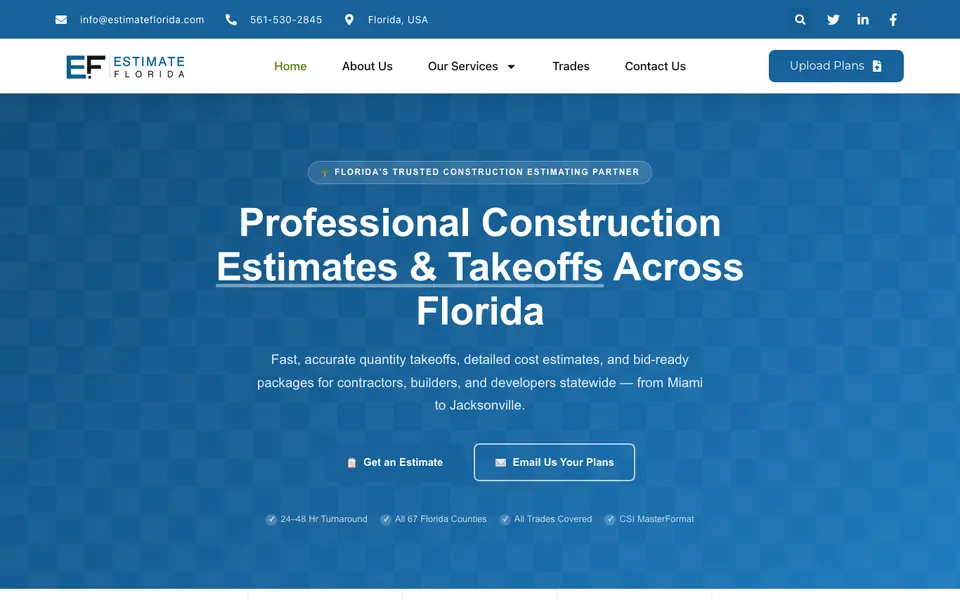
 Estimate Florida ConsultingConstruction estimating · Florida, USA

 Studio BaristasCoffee & café · United Kingdom
What to Do Next
If you want more commercial exterior painting projects in Miami, start by fixing the first thing every manager checks: your website. A clear commercial section, real project pages and an easy "invite us to bid" form will make every introduction, ad and referral work harder.
Websites start from $300, and you can estimate your cost with the calculator on our Miami website design page. Or ask for a free website plan and we will show you exactly what your commercial pages should include.