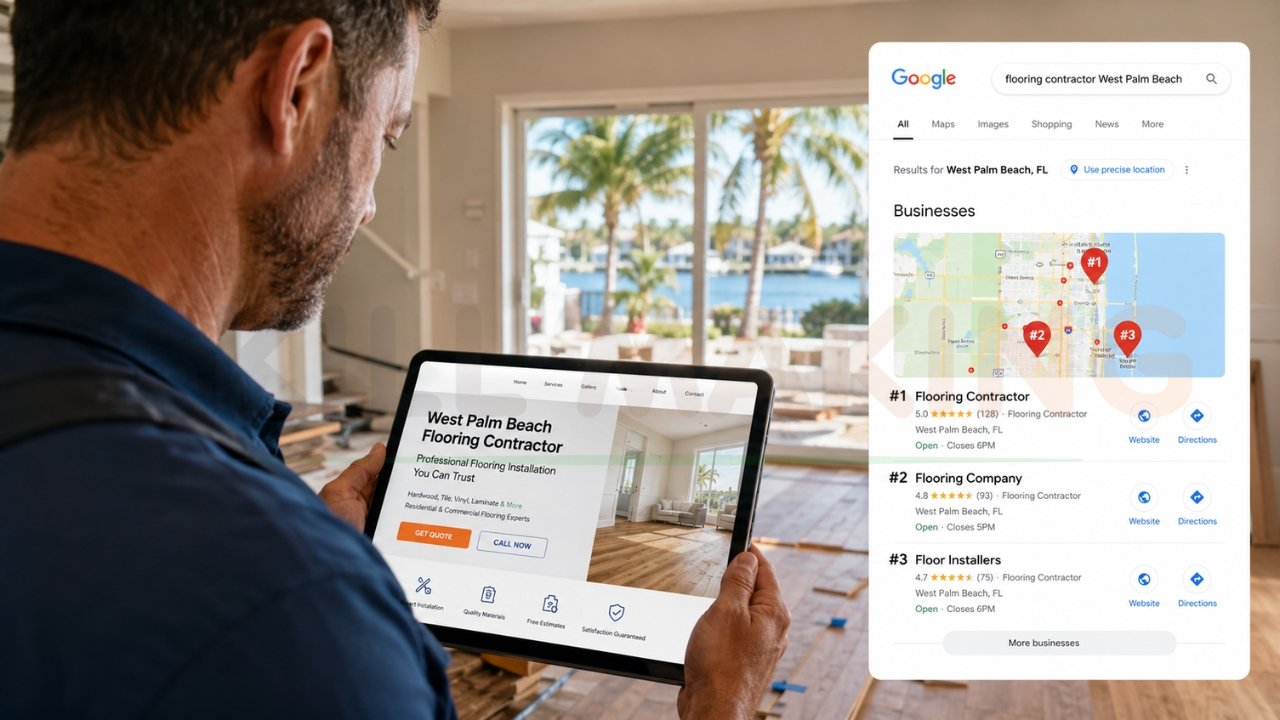
Imagine your business website as a physical office or showroom. If the front door is stuck, the walls are peeling, and the receptionist is nowhere to be found, potential clients won’t stick around. In 2026, your digital presence is the first, and often only, chance you get to make a lasting impression. Research shows that nearly 75% of users judge a company’s credibility based solely on its web design. Furthermore, as we navigate 2026, mobile-first design isn’t just a preference—it’s the standard, with approximately 80% of leads now searching via smartphones.
Understanding the various types of web design is no longer just for developers; it is a critical strategic decision for small business owners. Whether you are a general contractor in Miami or a local boutique owner, the style you choose directly impacts your loading speed, user experience (UX), and ultimately, your conversion rates. In this guide, we will break down the different web design styles and help you determine which modern web design types are best suited for your specific goals in 2026.
👉 Get the Right Type of Website Design for Your Business & Start Generating More Leads – 📲 WhatsApp Us Today
Why Understanding Different Types of Web Design Matters for Small Businesses?
Choosing the wrong architecture for your site is like trying to build a skyscraper on a residential foundation. If you are a plumber who needs urgent calls, a complex multi-page site with heavy animations might drive frustrated customers to a faster competitor. Conversely, a large construction firm relying on a single-page template may struggle to showcase the depth of their portfolio and lose high-value bids.
👉 Build a High-Converting Responsive Website That Looks Perfect on Every Device – 📲 Start Chat Now
For small businesses, the choice of website design influences:
- Search Engine Visibility: Different styles impact how easily search engines like Google can crawl and index your content.
- User Trust: Professional, cohesive designs build immediate digital trust.
- Lead Generation: Features like integrated WhatsApp buttons and “Call Now” features require specific design frameworks to function seamlessly.
- Scalability: A custom website design from Skillmaking allows your digital presence to grow as your business expands.
8 Main Types of Web Design Explained
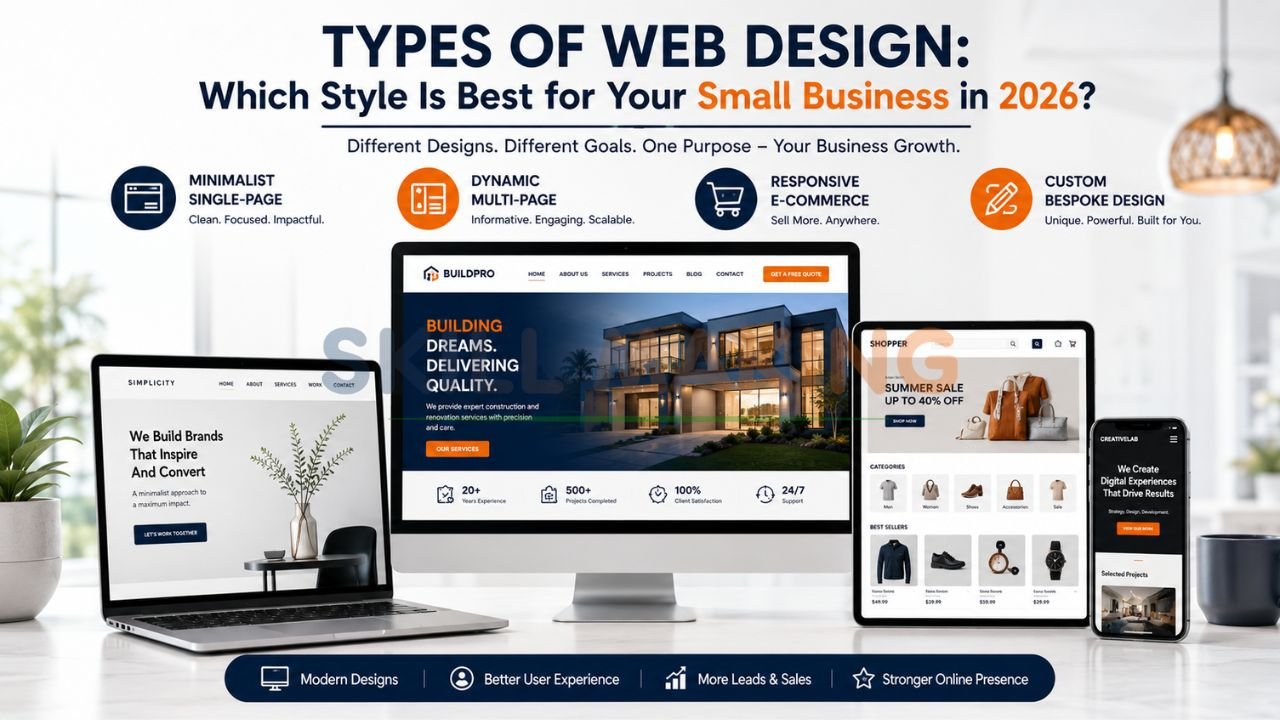
The digital landscape has evolved beyond simple “pages.” Here is a deep dive into the 8 primary types of web design dominating the market in 2026.
👉 Get a Custom Website Design Tailored for Your Business Growth in 2026 – 📲 Contact Us on WhatsApp
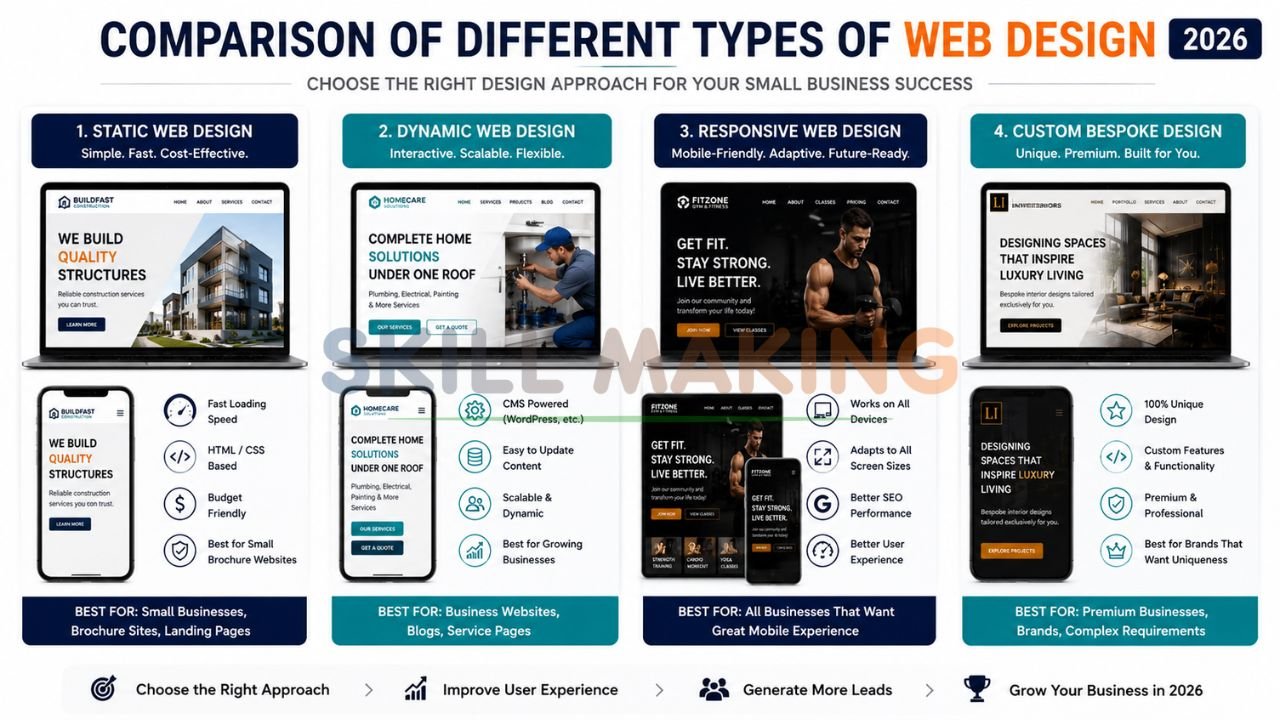
1. Static Web Design
Static websites are the “original” form of web design. They consist of pre-built files (HTML/CSS) that are delivered to the user’s browser exactly as they are stored on the server.
- The Benefit: They are lightning-fast and highly secure because there is no database to hack.
- The Downside: Every change requires manual coding. If you want to update your project portfolio, you’ll likely need a developer.
- Best For: Simple “digital business cards” for individuals or very small services that rarely need content updates.
2. Dynamic Web Design
Unlike static sites, dynamic web design uses a database to generate content on the fly. This is the foundation for most modern content management systems (CMS) like WordPress.
- The Benefit: It allows for interactive features like search bars, user accounts, and easy-to-update blogs.
- The Downside: They can be slower than static sites if not properly optimized, and they require regular security updates.
- Best For: Any business that needs to frequently update project galleries, news, or service listings.
3. Responsive Web Design
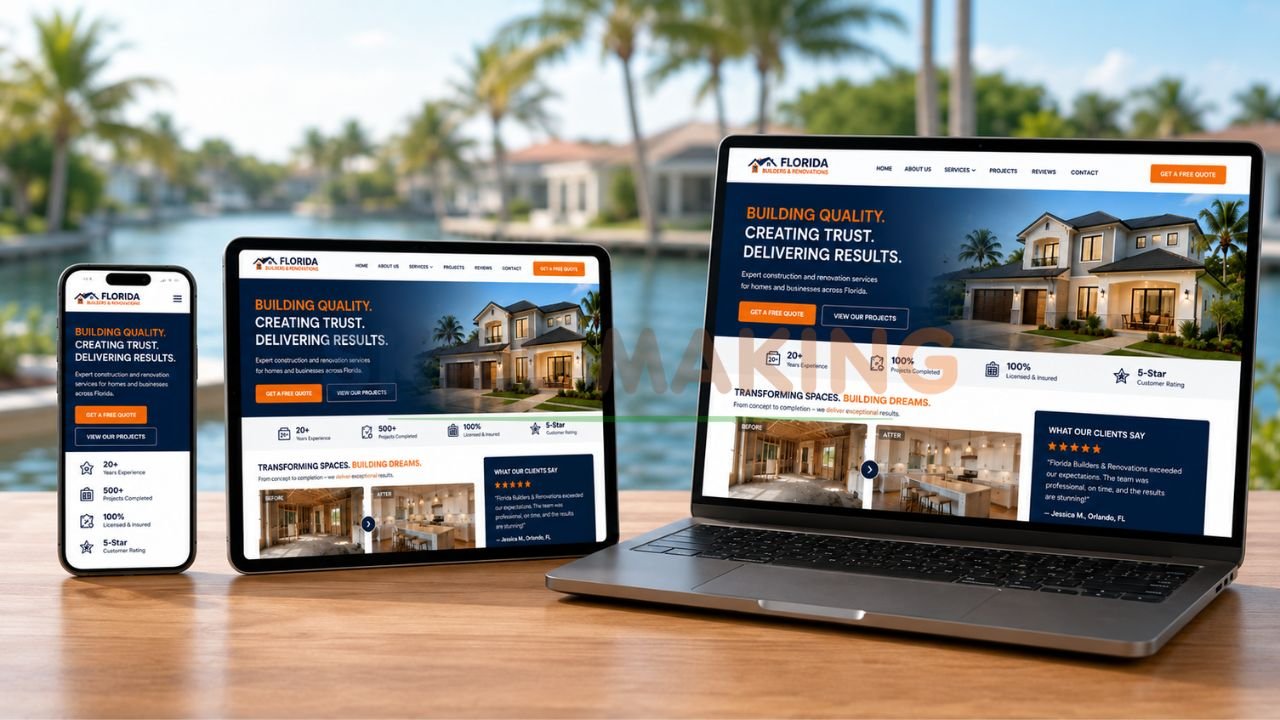
In 2026, responsive web design is non-negotiable. This approach uses flexible grids and layouts that automatically adjust to fit the screen size of the device, whether it’s a 4-inch smartphone or a 32-inch monitor.
- The Benefit: You only maintain one website that works everywhere. Google strongly favors responsive sites in search rankings.
- The Downside: Requires careful design to ensure elements don’t look “cluttered” on smaller screens.
- Best For: Virtually every small business, especially those in the trades where customers are often searching on-the-go.
4. Adaptive Web Design
While responsive design “flows” to fit a screen, adaptive web design uses several fixed layout sizes. The server detects the device and serves the specific layout designed for that screen size.
- The Benefit: Can provide a more “tailored” experience for specific devices.
- The Downside: Much more expensive and time-consuming to build, as you are essentially designing multiple versions of the same site.
- Best For: Complex applications where the mobile experience needs to be drastically different from the desktop experience.
👉 Upgrade from an Outdated Website to a Modern Lead-Generating Website Design – 📲 Message Us Today
5. E-commerce Web Design
E-commerce website design is specialized for selling products online. It integrates product catalogs, shopping carts, and secure payment gateways.
- The Benefit: Turns your website into a direct revenue generator.
- The Downside: Requires high-level security (SSL certificates) and ongoing maintenance to manage inventory and transactions.
- Best For: Retail businesses, suppliers, or even service firms selling “packages” online.
6. Single Page vs. Multi-Page Design
- Single Page Design: All content lives on one long-scrolling page. It is excellent for storytelling and high-conversion landing pages.
- Multi-Page Design: The traditional structure with separate pages for Home, Services, About, and Contact. This is essential for deep SEO as each page can rank for different keywords.
- Choosing Between Them: For a professional website design from Skillmaking, we often recommend multi-page structures for contractors to ensure every service (e.g., “Kitchen Remodeling,” “Roofing”) has its own SEO-optimized landing page.
7. Custom / Bespoke Web Design
A custom website design is built from the ground up to meet your specific business needs. It avoids the “cookie-cutter” look of generic templates.
- The Benefit: Total control over branding, performance, and functionality. It is the best way to get a custom web design tailored for your business that actually converts.
- The Downside: Higher initial investment compared to DIY builders.
- Best For: Businesses ready to scale, build a premium brand, and dominate their local market.
8. Minimalist, Parallax, and Material Styles
These are visual different web design styles that can be applied to the architectures above:
- Minimalist: Focuses on clean space and essential content. Excellent for luxury brands.
- Parallax: Background images move slower than foreground images, creating a 3D effect. Great for “Site of the Day” visual appeal.
- Material Design: A style developed by Google that uses shadows and edges to mimic real-world objects, making it very intuitive for users.
👉 Build a Fast, Mobile-First Website That Converts Visitors into Customers – 📲 Connect on WhatsApp
Comparison Table: Types of Web Design
| Type of Web Design | Pros | Cons | Best For | Estimated Cost (2026) |
|---|---|---|---|---|
| Static | Ultra-fast, secure | Hard to update | Small portfolios | ₹15k – ₹25k |
| Dynamic (CMS) | Easy updates, interactive | Maintenance required | Most small businesses | ₹25k – ₹75k |
| Responsive | One site for all devices | Complex to design | All businesses | ₹30k+ |
| Single Page | High conversion, simple | Poor SEO for multiple services | Landing pages | ₹20k – ₹40k |
| Custom Bespoke | Unique, high performance | Higher initial cost | Established brands | ₹80k – ₹3L+ |
Which Type of Web Design Is Right for Your Business?
Your choice should depend on your industry and how you get more home improvement leads.
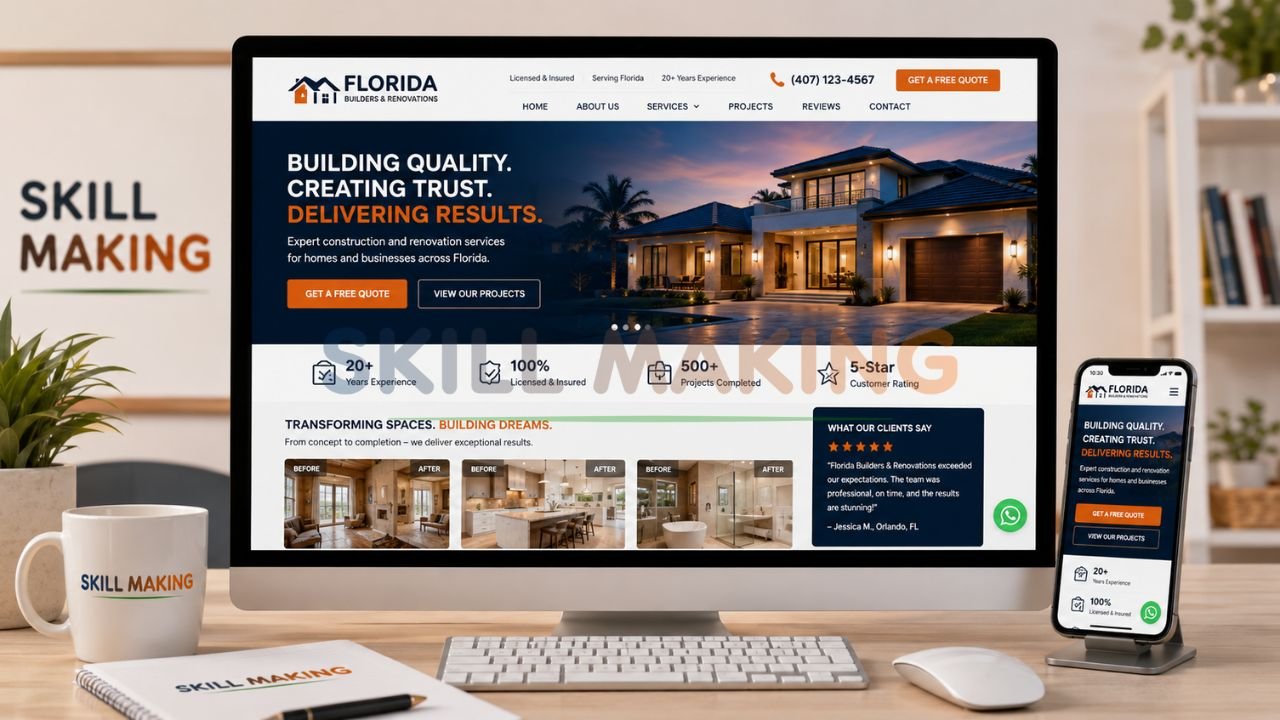
- Construction & Contractors: You need a Multi-Page, Responsive site. Each service needs its own page to rank for local keywords like “best general contractor in Orlando”. High-resolution project galleries are a must.
- Local Service Providers (Plumbers/Electricians): Focus on Mobile-First Responsive design with sticky “Call Now” buttons. Speed is your #1 priority because your customers are often in an emergency.
- Home Improvement Firms: Use a Dynamic design with interactive “Before & After” sliders to build visual trust.
Common Mistakes When Choosing a Web Design Type
Choosing a style based only on “looks” is one of the most common marketing mistakes construction companies make. Avoid these pitfalls:
- Ignoring Mobile Users: Choosing a style that looks great on a laptop but breaks on a phone will lose you 80% of your traffic.
- Sacrificing Speed for Beauty: Heavy parallax effects or unoptimized videos can cause your site to take longer than 3 seconds to load, causing users to bounce.
- Choosing a “Closed” Platform: Some DIY builders make it impossible to move your site later. Always ensure you own your digital assets.
- Misunderstanding Marketing: If you don’t know what marketing is in the construction industry, you might choose a design that looks pretty but lacks lead-capture tools like WhatsApp integration.
Key Features Every Professional Website Should Have in 2026
Regardless of the modern web design types you choose, these features are essential:
👉 Get a Professional Multi-Page Website Optimized for SEO & Local Leads – 📲 Talk to Experts Now
- Lightning-Fast Loading: Under 2 seconds is the goal for 2026.
- HTTPS/SSL Security: A non-negotiable for user trust and SEO.
- Instant Communication: Integrated WhatsApp buttons and quick-quote forms.
- GEO (Generative Engine Optimization): Content structured to be easily read by AI search agents.
- Verified Social Proof: Video testimonials and local neighborhood reviews.
How Skillmaking Helps You Choose and Build the Right Type of Website?
At Skillmaking, we don’t just “make websites”—we build high-converting lead machines. We understand that a plumber in Tampa needs a different design architecture than a luxury home builder in Miami.
Our process includes:
- Strategic Consultation: We analyze your market to identify which types of website design your competitors are using—and how to beat them.
- Conversion-Centric Design: We prioritize the user journey, ensuring a “frictionless” path from visitor to lead.
- Local SEO Mastery: We optimize every page for the specific Florida cities you serve.
- Ongoing Performance Monitoring: We keep your site updated with the latest security and search algorithms so you never fall behind.
Conclusion: Start Building Your Digital Future Today
In 2026, the types of web design you choose will be the difference between a business that struggles for leads and one that dominates its market. Don’t leave your most valuable digital asset to chance or generic templates. Whether you are looking for a sleek minimalist portfolio or a high-powered custom lead engine, Skillmaking is your partner in digital growth.
Ready to transform your online presence? Get a custom web design tailored for your business from Skillmaking today and start turning clicks into contracts.
High-Authority Resources for Further Reading:
- Nielsen Norman Group on UX Research
- Google Web Fundamentals for Developers
- Moz Beginner’s Guide to SEO
- Smashing Magazine Web Design Trends
- Awwwards Web Design Inspiration
- Small Business Administration Digital Guides
- HubSpot Marketing & Design Best Practices
Frequently Asked Questions
Q1: Is WordPress still the best choice in 2026?
Yes, for most small businesses, WordPress remains the top choice due to its flexibility, massive community, and excellent SEO capabilities, provided it is professionally optimized.
Q2: How much should a professional website cost for a contractor?
A high-quality, lead-generating site for a contractor typically ranges from ₹25,000 to ₹75,000, depending on the number of pages and custom features.
Q3: Can I use AI to build my website?
AI is a great tool for generating initial content or code snippets, but a professional site that builds “digital trust” still requires a human strategic touch for branding and UX.
Q4: What is the difference between responsive and mobile-friendly?
A “mobile-friendly” site might just be a smaller version of your desktop site. A “responsive” site actually rearranges elements to provide the best experience for the specific screen size.
Q5: How often should I update my web design style?
Most businesses should consider a refresh every 2–3 years to keep up with changing technology standards and visual trends.
Q6: Does my choice of web design affect my SEO?
Absolutely. Search engines prioritize sites that are fast, mobile-responsive, and have a clear hierarchy—all of which are determined by your design type.
Q7: Should I use a single-page website for my business?
Only if you offer a single, very specific service. If you offer multiple services, a multi-page site is better for SEO and organization.
Q8: Why does my site load slowly even though it looks modern?
Often, this is due to unoptimized images, too many heavy scripts, or a “bloated” theme. A professional audit can identify these “leaks”.