
Choosing between Elementor and Divi is one of the most critical decisions you will make for your WordPress website. As we move through 2026, the landscape of web design has shifted from simple drag-and-drop tools to comprehensive site management and AI-integrated ecosystems. Whether you are a small business owner in Florida looking to dominate local SEO or a freelancer building complex e-commerce stores, the tool you choose determines your workflow efficiency and your site’s performance.
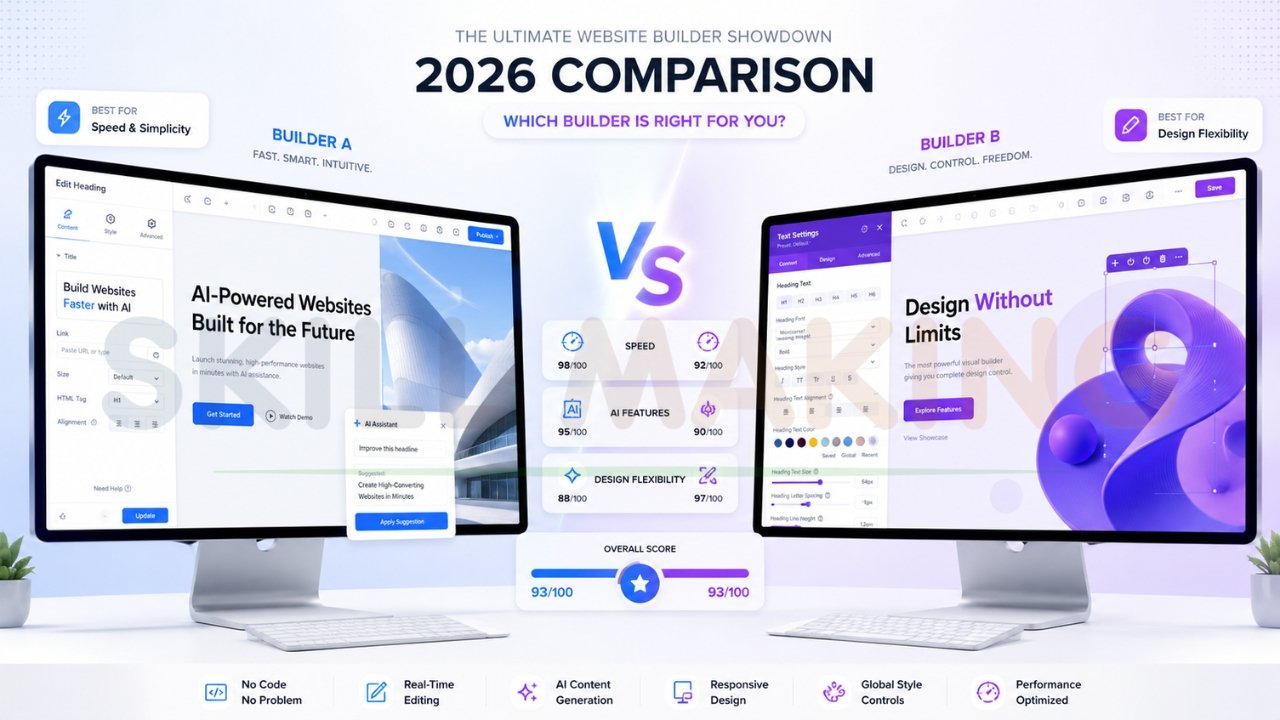
So, is Elementor better than Divi? The short answer is: it depends on your specific needs, but in 2026, the gap has narrowed significantly while their philosophies have diverged.
Quick Overview: What is Elementor and What is Divi?
What is Elementor?
Elementor is a powerful, interface-driven page builder that functions primarily as a plugin. It is famous for its “what you see is what you get” (WYSIWYG) live editing experience. In 2026, Elementor has evolved into much more than a builder; with the introduction of Elementor One, it now offers centralized site management, performance monitoring, and agentic AI tools like Angie Code to help developers create production-ready assets.
What is Divi?
Divi is both a WordPress theme and a standalone plugin by Elegant Themes. It is known for its highly flexible “Visual Builder” and its unique lifetime pricing model. Divi has long been a favorite for designers who want total control over every pixel without needing to touch a line of code. Its ecosystem includes a massive library of pre-made layouts and a supportive community.
Detailed Side-by-Side Comparison
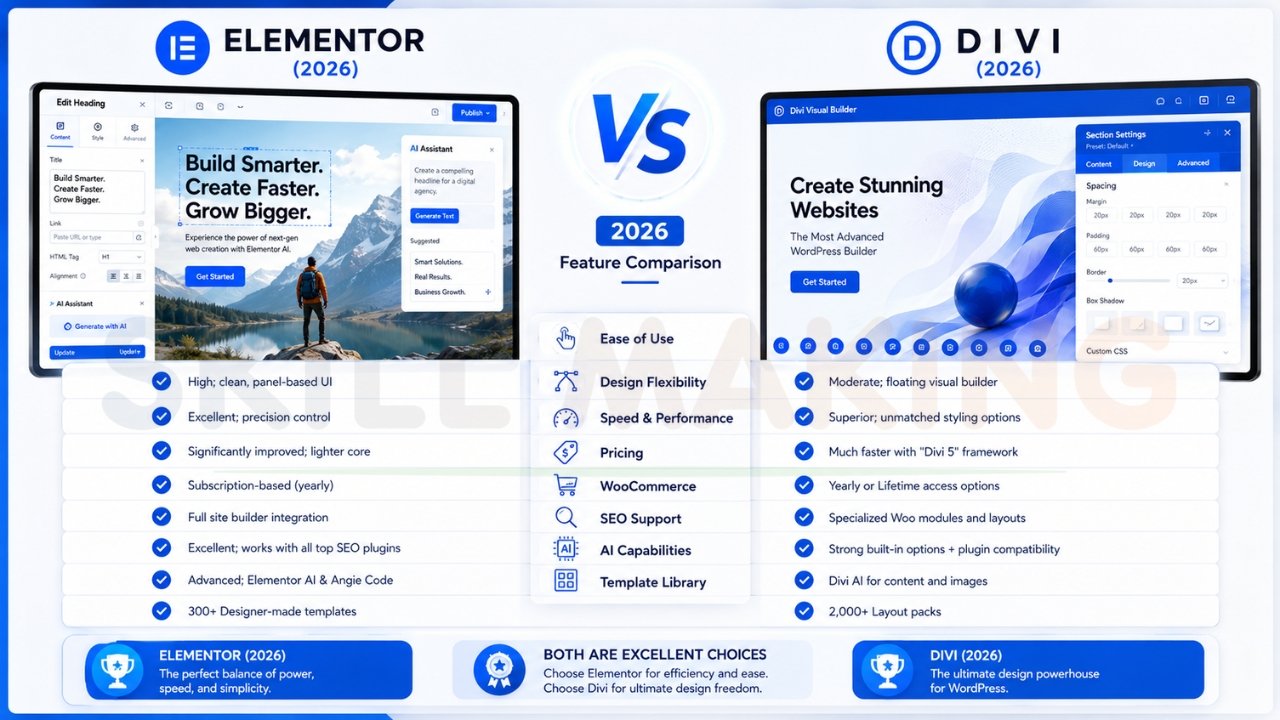
| Feature | Elementor (2026) | Divi (2026) |
|---|---|---|
| Ease of Use | High; clean, panel-based UI | Moderate; floating visual builder |
| Design Flexibility | Excellent; precision control | Superior; unmatched styling options |
| Speed & Performance | Significantly improved; lighter core | Much faster with “Divi 5” framework |
| Pricing | Subscription-based (yearly) | Yearly or Lifetime access options |
| WooCommerce | Full site builder integration | Specialized Woo modules and layouts |
| SEO Support | Excellent; works with all top SEO plugins | Strong built-in options + plugin compatibility |
| AI Capabilities | Advanced; Elementor AI & Angie Code | Divi AI for content and images |
| Template Library | 300+ Designer-made templates | 2,000+ Layout packs |
In-Depth Pros and Cons of Elementor
The Pros
- Intuitive Workflow: The fixed sidebar interface allows for a fast, predictable editing process. You don’t have to hunt for settings; they are always in the same place.
- Ecosystem & Add-ons: Elementor has the largest third-party ecosystem in the WordPress world. From “Premium Addons PRO” to “Selection Addons,” you can extend its functionality infinitely.
- Elementor One: The new 2026 management dashboard allows you to optimize and maintain multiple sites from a single location, including on-demand performance checks.
- Superior Theme Builder: Elementor’s ability to design headers, footers, and archive pages is still the gold standard for many developers.
The Cons
- Plugin Bloat: Because it relies heavily on third-party add-ons for advanced features, your site can become sluggish if not managed carefully.
- Security Maintenance: Frequent updates are required to keep the builder and its many add-ons secure. Hostinger security checks often identify outdated Elementor plugins as high-risk areas.
- Technical Glitches: We have seen instances where specific versions of Elementor Pro can conflict with other plugins, causing fatal errors if not monitored.
In-Depth Pros and Cons of Divi
The Pros
- Lifetime Value: For agencies or serial site builders, Divi’s lifetime license is unbeatable. Pay once, and use it on unlimited websites forever.
- Design Freedom: The wireframe mode and visual builder allow for complex layering and effects that are harder to achieve in Elementor without custom CSS.
- Global Elements: Divi’s “Global Modules” are incredibly powerful for making site-wide changes instantly.
- Layout Library: With over 2,000 pre-made layouts, Divi is perfect for those who want to launch a professional-looking site quickly by just swapping content.
The Cons
- Shortcode Lock-in: This is Divi’s biggest drawback. If you ever want to stop using Divi, your content will be left as a mess of shortcodes, making migration a nightmare.
- Learning Curve: The floating UI can sometimes be distracting or confusing for absolute beginners compared to Elementor’s structured panel.
- Visual Builder Lag: On lower-tier hosting, the visual builder can sometimes feel “heavy” or slow to respond during long design sessions.
Which One is Better For Different Users?
For Beginners
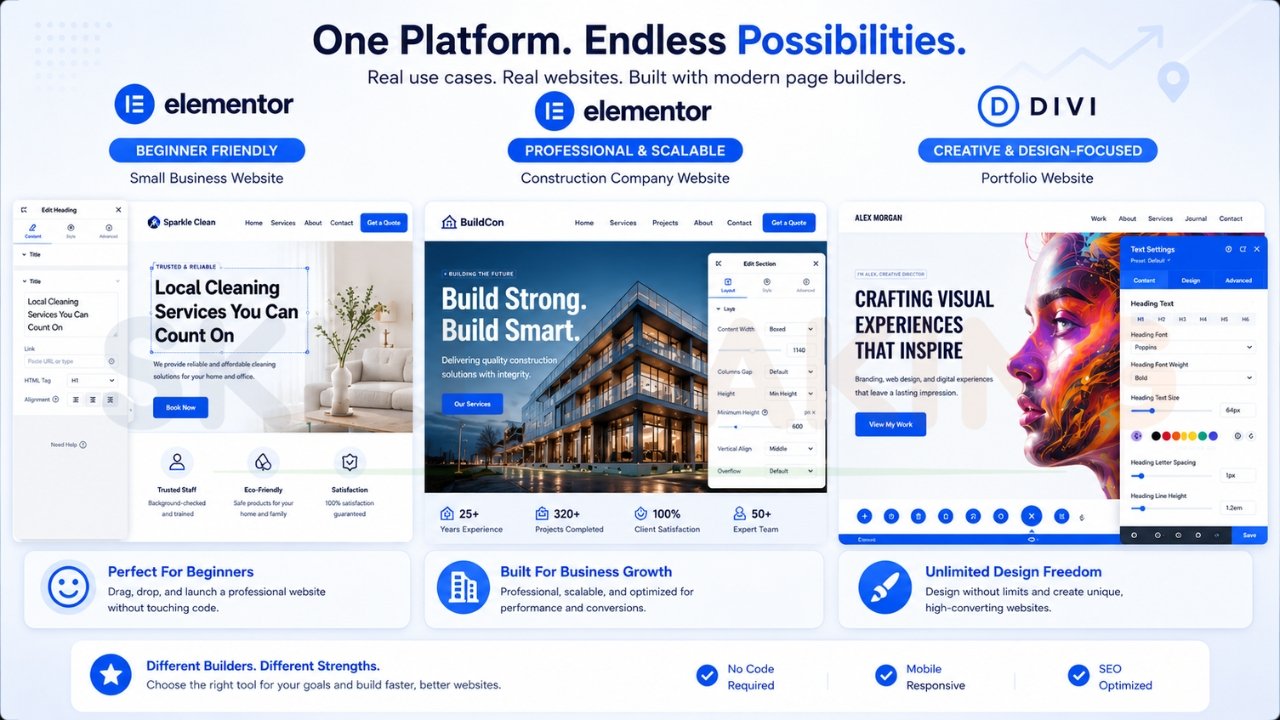
Elementor wins here. Its interface is more reminiscent of standard software, making it easier to pick up. The WPBeginner guide often recommends Elementor for those starting their first blog or business site.
For Agencies & Freelancers
Divi is often the choice for agencies due to the lifetime pricing and the ability to hand off a “design-complete” site to clients. However, Elementor One is specifically targeting this segment in 2026 with its bulk update and maintenance features.
For Speed-Focused Sites
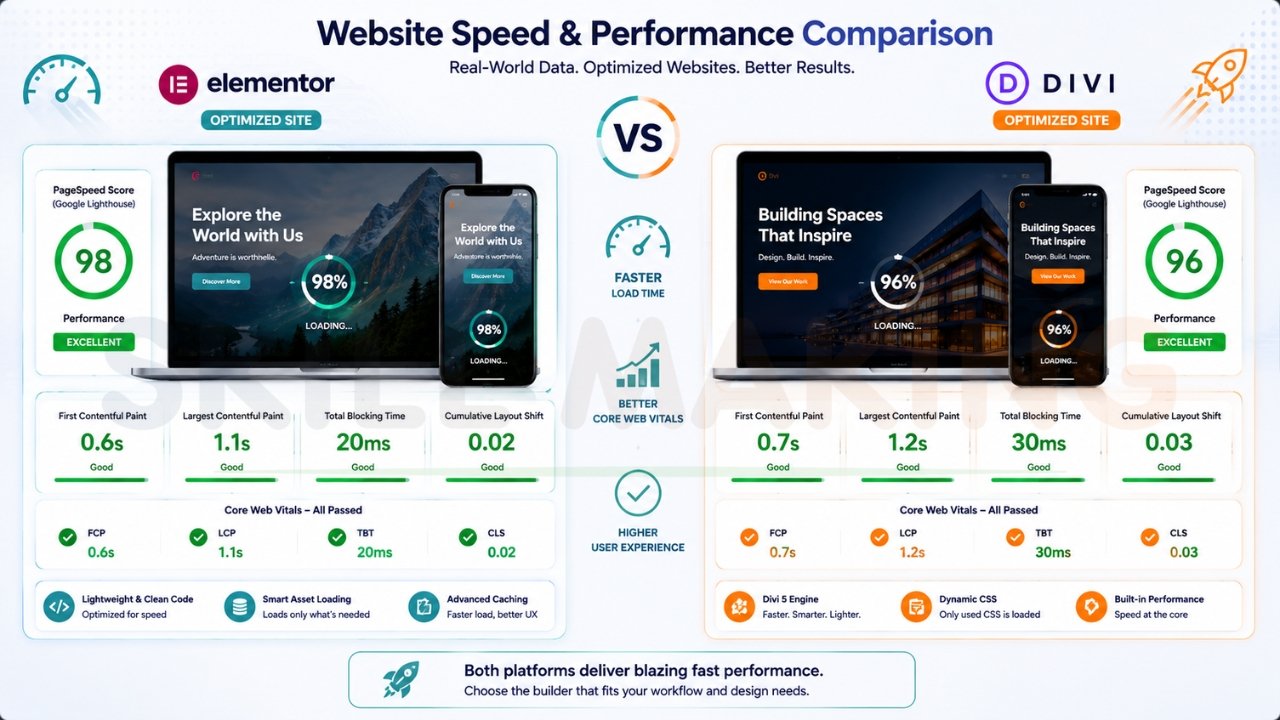
It is a tie in 2026. While Elementor was traditionally seen as faster, the latest updates to the Divi core have optimized performance significantly. Both now support modern web standards like Atomic CSS and better asset loading.
Real Performance Comparison
Loading Speed & Bloat
In 2026, both builders have made “clean code” a priority. Elementor’s Editor version 4 introduced an Atomic foundation, reducing the weight of the CSS and JS files loaded on the frontend. Divi, through its latest “Divi 5” initiative, has removed much of the historical bloat associated with shortcode processing.
Mobile Experience
Both builders offer “Mobile-First” design controls. You can hide specific sections on mobile, change font sizes for tablets, and adjust margins specifically for smaller screens. This is crucial for local businesses. For example, at Skill Making, we focus on mobile-first sites for Florida contractors to ensure they capture leads from customers on the go.
SEO Impact
Neither builder is “bad” for SEO. In fact, they both integrate seamlessly with plugins like Rank Math. Rank Math’s Content AI even works directly inside the Elementor and Divi editors, providing real-time optimization suggestions. The key to SEO with these builders is avoiding excessive “DOM depth” (too many nested sections).
Pricing Breakdown & Long-Term Costs
- Elementor: Starts at $59/year for a single site. The new “Elementor One” launch price offers a discounted window for those wanting advanced management features.
- Divi: $89/year or a one-time payment of $249 for lifetime access. This often makes Divi the more cost-effective choice over 3–5 years.
Migration: Switching Between Builders
Switching from Elementor to Divi is relatively straightforward as Elementor leaves behind clean HTML. However, switching from Divi to Elementor is complex. Because Divi wraps content in shortcodes, you will likely need to rebuild your pages from scratch or use specialized migration plugins to clean up the code. If you’re considering a switch, Search Engine Journal suggests auditing your content first to see if a full redesign is more efficient than a technical migration.
How Skill Making Uses These Builders?
At Skill Making, we don’t believe in a “one-size-fits-all” approach. We analyze your business goals first.
- For High-Converting Contractor Sites: We often use Elementor for its precise bid form integrations and project galleries, helping Florida tradespeople see a 300% growth in qualified leads.
- For Large-Scale Industrial Projects: We build robust sites that can handle complex inquiries, like those for United Concrete Products, where detailed quantity takeoffs and multi-file uploads are essential.
- Our Service: Whether you need a fresh design or help troubleshooting technical issues like fatal plugin errors, our Professional Website Design Services are designed to make your site a lead-generation machine.
Final Verdict & Our Recommendation
Is Elementor better than Divi?
For 2026, Elementor holds a slight edge for most small business owners and freelancers because of its intuitive workflow, the new Elementor One management suite, and its superior AI integration. It feels more like a modern web application.
However, Divi remains the champion of value. If you are building multiple sites and want to avoid the “subscription fatigue” of yearly fees, Divi’s lifetime license and massive layout library are impossible to ignore.
Conclusion
Both Elementor and Divi are world-class tools. Your choice should come down to which interface you enjoy using more and what your long-term budget looks like. If you want a structured, panel-based experience with cutting-edge AI, go with Elementor. If you want total design freedom and a one-time payment, Divi is your winner.
Struggling to decide which builder is right for your business?
Don’t waste weeks trying to learn both. Let the experts at Skill Making build a high-performing, SEO-optimized website for you.
- Explore our services: https://skillmaking.com/website-design/
- Get expert advice today: WhatsApp us at +91-7906334941 for a free consultation.
We’ve helped contractors, builders, and developers across Florida and India scale their digital presence—let us do the same for you.