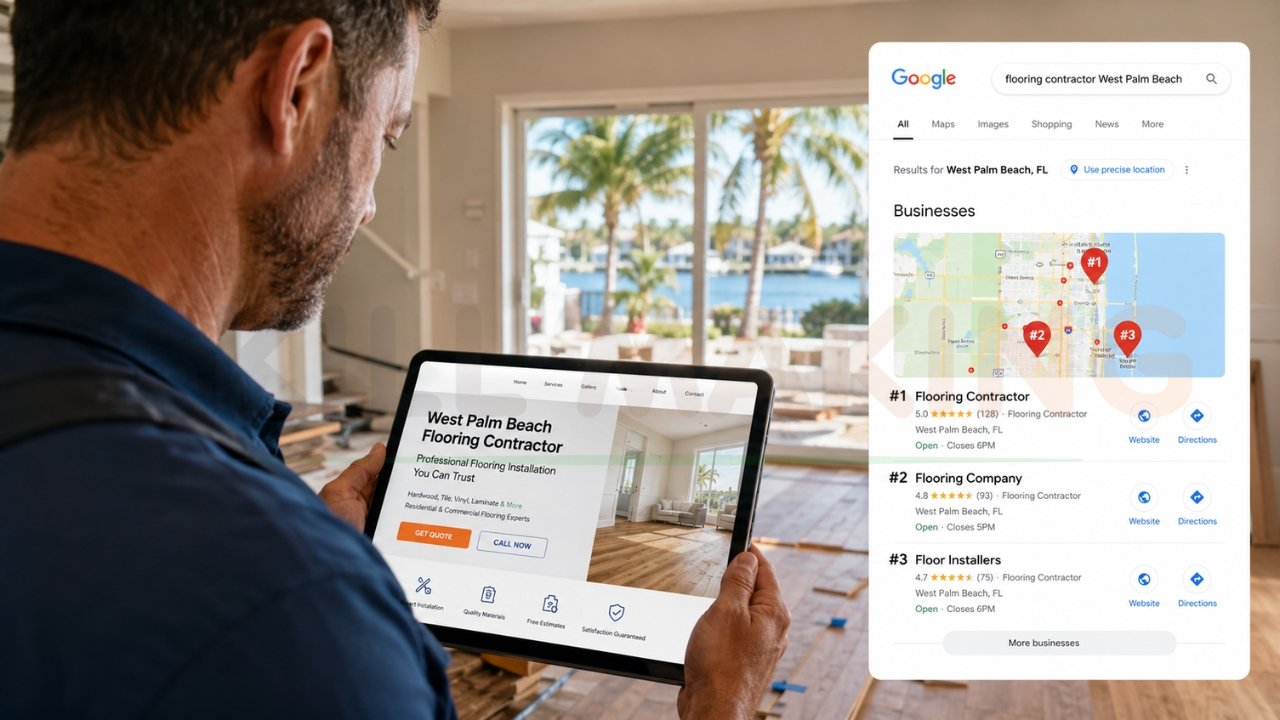
Hey, if you’ve been thinking about starting your own electrical business in Florida, you’re in exactly the right place — and honestly, there’s never been a better time to do it. Florida’s construction market is booming. New homes, commercial developments, and renovation projects are popping up all over the state, and the demand for licensed electrical contractors keeps climbing. Whether you’ve spent years as a journeyman wiring houses in Tampa, pulling permits in Orlando, or roughing in commercial buildings in Miami — your skills are worth more than you’re probably getting paid right now.
Imagine turning those skills into your own thriving electrical company. Your name on the truck. Your schedule. Your rates. It sounds exciting because it is exciting — but it also takes real planning to do it right. This guide walks you through every step, from getting your Florida electrical license to landing your first clients and building a rock-solid online presence that keeps your phone ringing.
Let’s get into it.
👉 Want to Start a Successful Electrical Business in Florida? 📞 Call/WhatsApp: +91 7906334941
Step 1: Make Sure You Meet Florida’s Electrical Licensing Requirements
Before anything else, you need to get your Florida electrical contractor license — no shortcuts here. The state takes this seriously, and for good reason.
Florida requires electrical contractors to be licensed through the Florida Department of Business and Professional Regulation (DBPR). There are two main license types you should know:
- Certified Electrical Contractor — Lets you work anywhere in Florida. This is the gold standard.
- Registered Electrical Contractor — Limits you to specific counties or cities that recognize your local license.
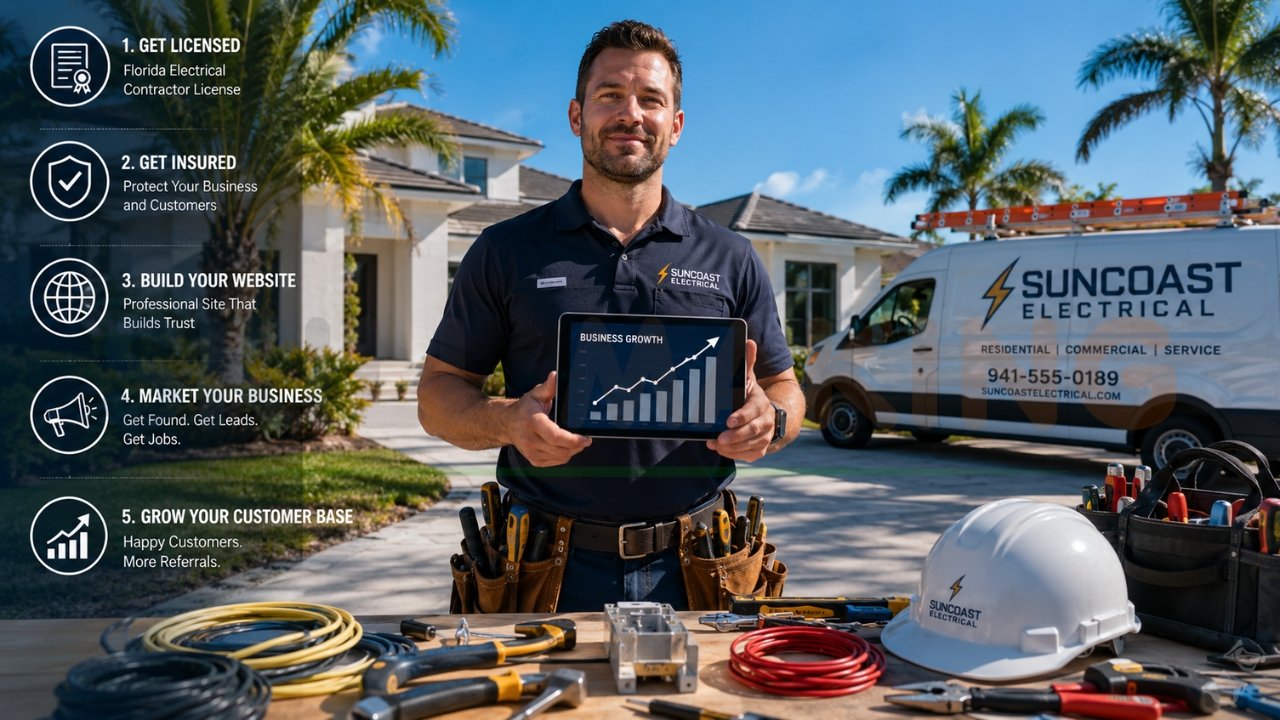
👉 Get Expert Help to Launch & Grow Your Electrical Company – 📲 Chat Now: +91 7906334941
What You’ll Need to Get Licensed in 2026
Here’s what the Florida DBPR generally requires:
- Proof of experience — At least 4 years of supervised electrical work experience (journeyman or higher).
- Pass the state exam — You’ll sit for the Florida Electrical Contractor Examination, which covers electrical theory, the National Electrical Code (NEC), and Florida-specific business and finance questions.
- Proof of financial stability — Florida checks your credit history and may require a financial statement.
- Insurance — General liability and workers’ compensation are mandatory.
- Application and fees — Fees vary; check the current DBPR fee schedule before applying.
Pro tip: If you haven’t taken an NEC exam prep course recently, invest in one. The 2026 NEC has some updates, and being sharp on the code questions can make or break your exam score.
Step 2: Choose Your Business Structure and Register Your Company
Once you’re on the path to getting licensed, it’s time to set up your business legally. This step protects your personal assets and makes you look professional to clients and general contractors alike.
Common business structures for electrical contractors:
- Sole Proprietorship — Simple and cheap to set up, but offers zero liability protection. Not recommended if you’re doing anything larger than small residential work.
- LLC (Limited Liability Company) — The most popular choice for Florida electrical contractors. It protects your personal assets and is easy to manage.
- S-Corp or C-Corp — Worth considering once you’re scaling and hiring multiple crews.
To register your LLC in Florida, file your Articles of Organization with the Florida Division of Corporations (sunbiz.org). The filing fee is typically around $125. Then, grab your EIN (Employer Identification Number) from the IRS — it’s free and takes about 5 minutes online.
Don’t skip this step. Operating as a legitimate, registered business builds trust with homeowners, GCs, and commercial clients from day one.
Step 3: Get Your Insurance and Bonding in Order
Insurance isn’t optional in this business — it’s your safety net and your credibility badge. In Florida, you’ll need at least:
- General Liability Insurance — Covers property damage and bodily injury claims on the job.
- Workers’ Compensation Insurance — Required as soon as you have employees in Florida (and in some cases, even as a sole owner depending on the situation).
- Commercial Auto Insurance — If you’re driving a work truck, a standard personal auto policy won’t cover business-related accidents.
Many clients — especially commercial ones — will ask to see your Certificate of Insurance (COI) before they’ll even let you submit a bid. Having solid coverage makes you look serious and professional.
Some GCs also require contractor bonding, which protects clients if a project goes unfinished. It’s usually affordable and well worth having on hand.
Step 4: Set Up Your Finances Like a Real Business Owner
Running a business is very different from being an employee. Mixing personal and business money is one of the fastest ways to create chaos — and IRS headaches — down the road.
Get these basics in place early:
- Open a dedicated business bank account. Keep every dollar in and out separated from your personal finances.
- Use accounting software. QuickBooks, FreshBooks, or Wave are all solid choices that electrical contractors love.
- Track every expense. Truck mileage, tools, material costs, insurance premiums — these are all potentially deductible.
- Set aside money for taxes. As a self-employed contractor, you’ll pay quarterly estimated taxes. Aim to set aside 25–30% of your profit from day one.
If numbers aren’t your thing, hire a bookkeeper early. It’s one of the smartest investments you’ll make as a new business owner.

👉 Need Website Design, SEO & Marketing for Electricians in Florida? 📞 WhatsApp Today: +91 7906334941
Step 5: Price Your Services to Stay Profitable
A lot of new electrical contractors underprice their work — and then burn out fast. Don’t let that be you.
To price your jobs correctly, you need to know your fully-loaded cost per hour, which includes:
- Your labor cost (and any subcontractor labor)
- Material markups
- Overhead: insurance, truck payments, tools, software, advertising
- Taxes
- And your profit margin on top of all that
In Florida, residential electrical contractors typically charge anywhere from $75 to $200+ per hour depending on the complexity of the work, location, and specialization. Commercial and industrial rates can be significantly higher.
Use job costing from the start. Know what it costs you to complete every job, then price accordingly. It takes discipline, but it’s the difference between a struggling startup and a thriving company.
Step 6: Get Your First Clients (And Keep Them)
You can be the best electrician in Florida — but if nobody knows you exist, your calendar stays empty. Getting those first clients takes hustle and strategy.
Here’s what actually works in 2026:
- Tell everyone you know. Family, former coworkers, neighbors — let them all know you’ve launched. Word of mouth is still incredibly powerful in the trades.
- Connect with general contractors. GCs are gold. One solid relationship with a GC can keep you busy for months. Show up, be reliable, do great work, and they’ll keep calling.
- Join local trade associations. Florida has active chapters of organizations like NECA (National Electrical Contractors Association) and local contractor networks where referrals flow freely.
- List your business on Google, Yelp, and Angi. Free listings that can generate calls quickly.
- Ask for reviews early and often. A handful of 5-star Google reviews can be the deciding factor when a homeowner is choosing between you and a competitor.
Step 7: Build a Professional Website That Works as Hard as You Do
Here’s something a lot of new electrical contractors skip — and then regret. A professional website isn’t a luxury anymore. It’s one of your most important business tools, full stop.
Think about it from your customer’s perspective. When someone in Orlando needs a licensed electrician to rewire their home, what’s the first thing they do? They Google it. If your business doesn’t show up, or worse, shows up with a janky website that looks like it was built in 2010, you’ve already lost that job to a competitor.
A great electrical contractor website in 2026 should have:
- Fast load times — Google penalizes slow websites, and customers bounce off them.
- Mobile-friendly design — Most searches happen on phones. Your site needs to look great and work perfectly on a 6-inch screen.
- Clear calls-to-action — “Get a Free Quote,” “Book an Estimate,” “Call Now” buttons that are impossible to miss.
- Project photo galleries — Show before-and-after photos of your electrical work. Social proof matters.
- Service area pages — If you serve multiple cities across Florida (say Tampa, Clearwater, and St. Pete), you need individual pages for each to rank locally.
- Google Business Profile integration — Your website and GBP should work together to dominate local search.
This is exactly where Skill Making comes in. They build beautiful, high-converting websites specifically for Florida contractors and trades businesses — designed from day one to rank on Google and turn visitors into paying customers.
Just like they’ve done for HVAC contractors across Florida, roofing contractors, and painting contractors, Skill Making can set up your electrical business with a professional online presence that gets you more calls, more bids, and more booked jobs — starting from day one.
The investment in a quality website pays for itself with a single good-sized job. And when it’s paired with hyper-local SEO, it becomes an asset that generates leads around the clock — even while you’re on a job site.
If you want to see the kind of impact a well-designed website can have across the trades, take a look at what Skill Making has built for flooring contractors and drywall contractors — the same principles apply directly to electrical businesses.
Step 8: Set Up Local SEO to Dominate Google Search in Florida
Having a great website is step one. Getting it found is step two — and this is where most new contractors fall flat.
Local SEO (Search Engine Optimization) is the process of making your business show up when someone nearby searches for “electrician near me,” “electrical contractor [city name],” or “licensed electrician in Florida.”
Here’s what strong local SEO looks like for a new electrical business:
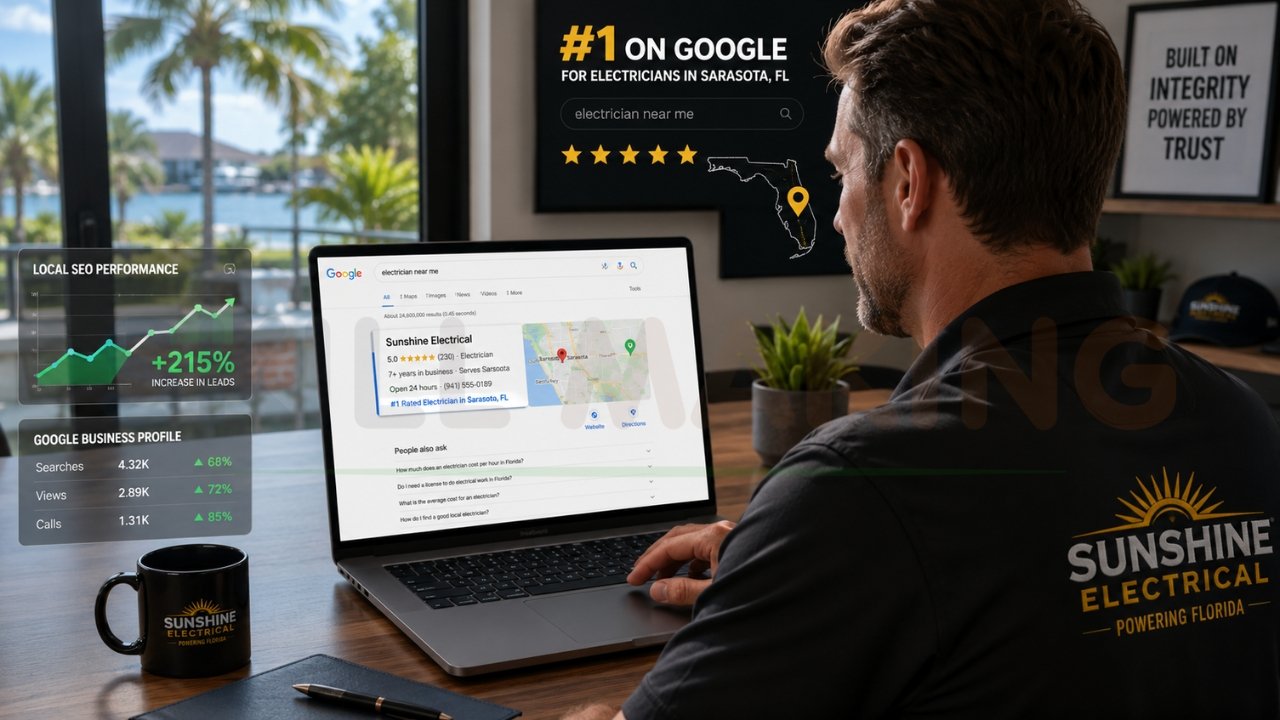
- Claim and optimize your Google Business Profile (GBP). Add your business name, phone number, service area, photos, hours, and services. Get reviews rolling in early.
- Build local citations. Make sure your business name, address, and phone number (NAP) are consistent across Yelp, Angi, HomeAdvisor, BBB, and other directories.
- Create city-specific service pages. If you want to rank for “electrician in Jacksonville,” you need a page specifically about your services in Jacksonville.
- Publish helpful content regularly. Blog posts answering common questions (just like this one) drive organic search traffic over time.
- Earn backlinks from local sources. Local chamber of commerce websites, trade associations, and local business directories all count.
Skill Making handles all of this as part of their website design and local SEO services for construction companies. Instead of trying to figure out the SEO world on top of running a new business, you can hand that off to people who specialize in it for Florida contractors specifically.
👉 Grow Your Electrical Business Faster with Proven Marketing Strategies – 📲 Call Now: +91 7906334941
Step 9: Build Out Your Tools, Equipment, and Team
As you start winning jobs, you’ll need to invest in the right tools and equipment. Start lean, rent when it makes sense, and buy as you grow.
Essential startup equipment for an electrical contractor:
- Quality hand tools (wire strippers, pliers, conduit benders, etc.)
- A reliable multimeter and voltage tester
- Fish tape and drill bits for running wire
- A reliable work truck or van with good organization (pegboards, shelving systems)
- Safety gear: hard hat, safety glasses, work boots, voltage-rated gloves
When you’re ready to hire, start with one reliable helper before adding full electricians. Track your job costs carefully so you know exactly when adding another person actually becomes profitable — not just busy-looking.
Step 10: Scale Smart and Systemize Early
Most electrical businesses plateau because the owner never builds systems. They handle every call, every estimate, every invoice. That’s a job — not a business.
Start building systems early:
- Use estimating software like Jobber, ServiceTitan, or Housecall Pro to track leads, jobs, and invoices.
- Create a simple onboarding process for new clients so every customer gets a consistent experience.
- Set up automated review request texts after each job is completed.
- Build a referral program — a small gift card to a customer who sends you a referral goes a long way.
These systems let you run a bigger operation without losing your mind.
FAQ: Starting an Electrical Business in Florida
Q: How much does it cost to start an electrical business in Florida? A: Startup costs typically range from $10,000 to $30,000+ depending on whether you already have tools, a vehicle, and how much you invest in marketing and website setup. Licensing, insurance, business registration, and basic equipment are your biggest initial costs.
Q: Do I need to be a master electrician to own an electrical contracting business in Florida? A: Not necessarily a “master electrician” by title, but you do need a Florida Certified or Registered Electrical Contractor license, which requires documented experience and passing a state exam.
Q: How long does it take to get an electrical contractor license in Florida? A: From application to approval, the process typically takes 3–6 months depending on how quickly you complete the exam and how long DBPR takes to process your application.
Q: Can I run an electrical business from home in Florida? A: Yes — many solo contractors operate from a home office and a work truck. You don’t need a brick-and-mortar location to be licensed and legitimate in Florida.
Q: How do I get my first electrical contracting clients in Florida? A: Start with your network, connect with general contractors, claim your Google Business Profile immediately, and invest in a professional website with local SEO. Those combined efforts generate leads faster than almost anything else.
Q: Is a website really necessary for a new electrical business? A: Absolutely. In 2026, your website is your #1 sales tool. Most homeowners and property managers Google contractors before they ever call. Without a website, you’re invisible to a huge portion of your potential market.
Ready to Launch Your Florida Electrical Business the Right Way?
Starting an electrical business in Florida in 2026 is genuinely one of the best moves you can make with your skills and experience. The market is there. The demand is real. And with the right foundation — proper licensing, smart pricing, solid systems, and a professional online presence — you can build a company that’s busy, profitable, and growing year after year.
The one thing new electrical contractors consistently wish they’d done sooner? Invested in a great website and local SEO from the very beginning. Every month you wait is another month of leads going to your competitors.
Ready to start your electrical business on the right foot and get more calls from day one? Reach out to Skill Making right now at +91 7906334941 (WhatsApp) or email us at info@skillmaking.com — we’d love to help you build a website that grows with your new business in Florida!