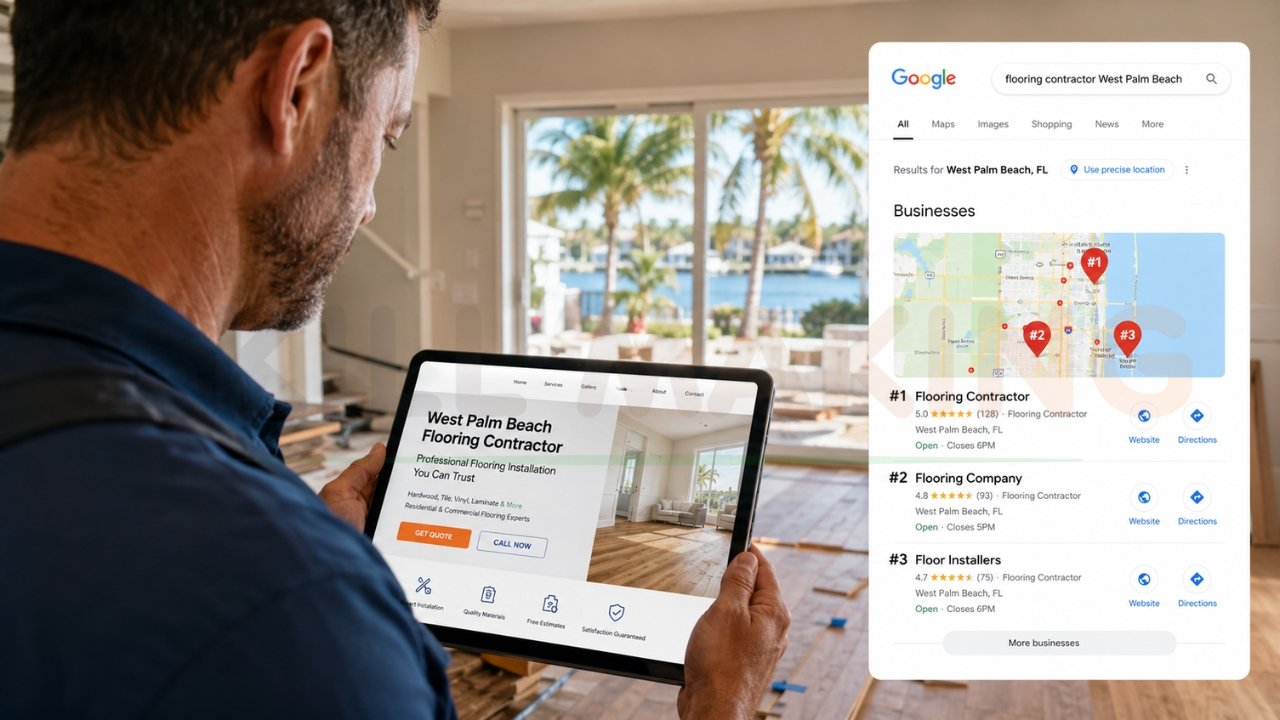
Hey, if you’re about to launch a new website for your construction company in Florida, you are making a massive move. Picture your new site ranking on page 1 and bringing in leads from day one. It sounds like a dream, right? But in the highly competitive Florida market, a beautiful website simply isn’t enough anymore. Homeowners and commercial clients are searching online right now, and they are choosing the contractors who show up first and look the most trustworthy.
If your new site isn’t built from the ground up with the latest search engine rules, it will just sit there collecting digital dust. The great news? Getting it right isn’t magic. It comes down to following a strict, proven playbook. In 2026, contractor SEO is all about local visibility, lightning-fast mobile speeds, and proving your expertise to both humans and AI search tools.
👉 Need SEO Setup for Your New Website? 📲 Call/WhatsApp: +917906334941
At Skill Making, we specialize in professional website design and local SEO services built specifically for Florida contractors and all construction trades. We know exactly what it takes to help you launch a new website that ranks fast, gets more traffic, more qualified leads, and wins more projects in Florida.
Let’s dive into the ultimate 2026 SEO checklist for your new construction website. No fluff, no jargon—just real-world steps you can take to dominate local search.
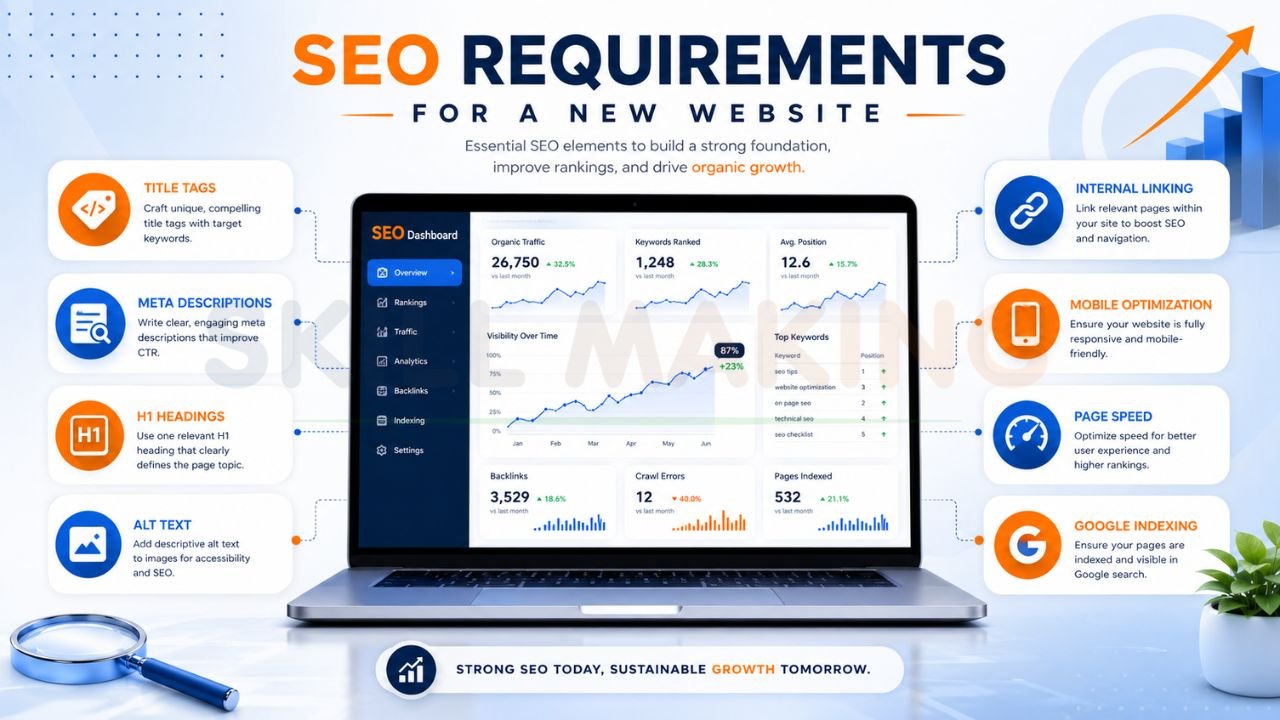
1. The Pre-Launch Technical SEO Foundation
Before you even think about publishing a single page, you need to get the technical foundation right. Most websites fail at SEO before they even launch because their digital plumbing is broken. Search engines like Google need to be able to crawl, read, and understand your site easily.
Domain, Hosting, and Security
Your domain name is your digital address. Keep it short, brandable, and easy to spell. While it used to be trendy to stuff keywords into your domain, Google now prefers strong, memorable brand names.
Next, you need rock-solid hosting. Your hosting provider dictates your site’s uptime and speed. In the fast-paced Florida market, your site needs to be up 99.9% of the time. You also absolutely must have an SSL certificate installed. If your site doesn’t say “HTTPS” in the browser, Google will slap a massive “Not Secure” warning on it, which will instantly scare away potential leads.
Connect Your Analytics and Webmaster Tools
If you aren’t tracking your traffic, you are flying blind. Before launch day, you need to set up your tracking tools. These are completely free and non-negotiable for a successful launch.
- Google Search Console (GSC): This is your direct line of communication with Google. It tells you if your pages are indexing properly and alerts you to any crawl errors.
- Google Analytics 4 (GA4): This tool tracks what people do once they actually land on your website. You can see which pages they visit and track conversions like form fills and phone calls.
- Bing Webmaster Tools: Don’t ignore Bing! A lot of older, affluent homeowners use Bing as their default search engine. Import your data directly from GSC to capture this traffic.
XML Sitemaps and Robots.txt
Think of an XML sitemap as a roadmap that tells Google exactly where every important page on your website lives. You need to generate an auto-updating XML sitemap and submit it directly to Google Search Console. At the same time, check your robots.txt file. This file tells search engines what not to crawl. A single typo here can accidentally block Google from seeing your entire website—a mistake we see far too often.
👉 Want Higher Rankings & More Leads from Google? 📞 Call/WhatsApp: +917906334941
2. Website Architecture and Mobile-First Design
How your website is organized matters just as much as what you say. Search engines use the structure of your site to figure out which pages are the most important.
The 3-Click Rule and Logical Structure
Your website needs a flat, logical structure. The golden rule is the “3-Click Rule”: any page on your website should be reachable within three clicks from your homepage.
Start with a strong homepage, branch out to a main “Services” hub, and then link down to individual service pages. This pyramid structure makes it incredibly easy for Google to crawl your site and understand your hierarchy.
URL Structure Best Practices
Your URLs (the web addresses of your pages) need to be clean and simple. Plan this out before you build, because changing URLs later is a massive headache.
- Keep it short: Use descriptive words.
- Use hyphens: Separate words with hyphens, never underscores.
- No dates or weird IDs: Keep it timeless.
- Good Example: yourdomain.com/kitchen-remodeling-miami
- Bad Example: yourdomain.com/services/index.php?id=4
Mobile-First Indexing is Non-Negotiable
Here is a massive reality check for 2026: Google looks at the mobile version of your website first. If your site looks great on a desktop but is clunky on an iPhone, your rankings will tank. Over 60% of local service searches happen on mobile phones, usually by homeowners who need help right now.
Your mobile design must be responsive, with touch targets (like buttons) that are at least 48 pixels wide so people don’t accidentally click the wrong thing. There should be zero horizontal scrolling. When Skill Making creates website design services for construction companies, we build mobile-first, ensuring that click-to-call buttons and contact forms are the very first things your mobile visitors see.
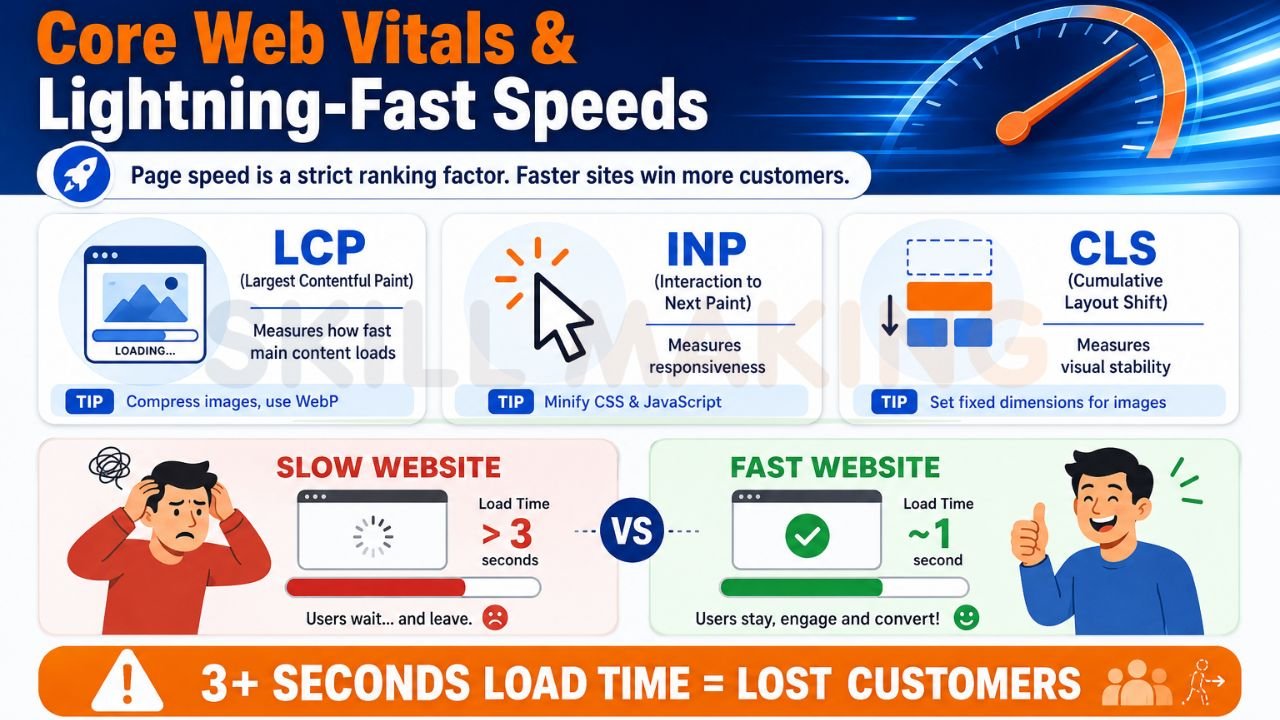
3. Core Web Vitals and Lightning-Fast Speeds
Page speed is no longer just a nice-to-have; it is a strict ranking requirement. Google uses a set of metrics called Core Web Vitals to judge how fast and user-friendly your site is.
Homeowners don’t have the patience to wait for a slow website to load. If your site takes longer than three seconds to appear, they will hit the back button and call your competitor.
| Core Web Vital Metric | What It Measures | How to Fix It for a New Website |
| LCP (Largest Contentful Paint) | How fast the main image or text block loads. | Compress large portfolio images and convert them to modern WebP formats. |
| INP (Interaction to Next Paint) | How fast the site responds when a user clicks a button. | Minify your CSS and JavaScript files to remove bulky code. |
| CLS (Cumulative Layout Shift) | How much the page jumps around while loading. | Set exact width and height dimensions for all images and videos. |
Enable lazy loading for your images, which means photos further down the page only load when the user actually scrolls to them. This dramatically speeds up the initial load time.
👉 Get Website SEO, Google Maps SEO & Lead Generation Services – 📲 Chat Now: +917906334941
4. On-Page SEO: Speaking Google’s Language
On-page SEO is the process of putting the right words in the right places on your website so search engines know exactly what you do and where you do it.
Smart Keyword Research
Keyword stuffing (cramming the same word onto a page 50 times) will actively get your site penalized in 2026. Today, SEO is about search intent. You need to use the exact phrases homeowners are typing into Google.
Target primary keywords (like “general contractor Orlando”) but also use LSI keywords. These are naturally related words that help search engines understand context. If you are a builder, naturally sprinkle in words like permitting, preconstruction, design-build, structural changes, and project management.
Create Dedicated Service Pages
Do not dump all of your services onto one single, generic “Our Services” page. That is a massive SEO mistake. Google ranks relevance. If someone is searching for “roof repair,” they want a page dedicated entirely to roof repair.
You need a separate page for every single service you offer. For example, if you offer 10 construction website ideas to generate qualified leads, you know that breaking your services down into dedicated landing pages (e.g., Kitchen Remodeling, Room Additions, Driveway Paving) allows you to target specific keywords perfectly.
Title Tags and Meta Descriptions
Every page needs a unique Title Tag and Meta Description. These are the blue links and short descriptions that show up on the Google search results page.
- Title Tags (Under 60 characters): Put your main keyword near the front, followed by your city, and end with your brand name. Example: Emergency HVAC Repair in Tampa | Brand Name.
- Meta Descriptions (140-160 characters): This is your sales pitch. Summarize the page, include your keywords naturally, and always end with a call to action like “Call today for a free estimate!”.
- H1 Tags: You should only ever have one H1 tag per page. It acts as the headline of a newspaper.
5. Generative Engine Optimization (GEO) in 2026
Welcome to the biggest shift in search behavior this decade. In 2026, you aren’t just optimizing for Google’s traditional blue links. You are optimizing for AI search engines like ChatGPT, Perplexity, and Google’s AI Overviews. Over 60% of searches now involve an AI component.
This new strategy is called Generative Engine Optimization (GEO). The goal isn’t just to rank; the goal is to be cited by the AI when it answers a homeowner’s question.
How do you optimize for AI? AI loves structure and facts.
- Use clear Question-Based Headings: If your H2 heading asks “How Much Does Kitchen Remodeling Cost in Florida?”, the very next sentence should be a direct, clear, 2-to-3 sentence answer.
- Use Bullet Points and Tables: AI models easily extract information from lists.
- Cut the Fluff: Don’t write long, decorative stories. Write clean, factual sentences that a machine learning model can easily understand and repeat.
👉 Launch Your Website with Professional SEO – 📞 WhatsApp: +917906334941
6. Hyper-Local SEO for Florida Contractors
If you want to get your phone ringing, you have to dominate local search. For contractors, your most valuable real estate is the Google Map Pack (those top three map results that show up for local searches).
Claim and Optimize Your Google Business Profile
Your Google Business Profile (GBP) is the single most important piece of your local SEO strategy. You must claim it, verify it, and fill out absolutely every single field.
- Primary Category: Choose this carefully. If you are a roofer, your primary category must be “Roofing Contractor,” not “General Contractor”.
- Service Areas: Accurately list every city, county, and zip code you serve in Florida.
- Consistent Updates: Upload real photos of your job sites, your branded trucks, and your team every single week. Profiles with real photos get 42% more direction requests than those with stock images.
NAP Consistency and Citations
NAP stands for Name, Address, and Phone Number. This exact information needs to be identical across the entire internet. If your website says “123 Main St.” but your Yelp profile says “123 Main Street Suite 2,” it confuses Google and hurts your local ranking. You need to build clean local citations on directories like Angi, Houzz, the Better Business Bureau, and local Florida Chamber of Commerce sites.
The Power of Local Reviews
Reviews are trust signals. In 2026, users read reviews to confirm you are credible before they even think about calling you. Google doesn’t just look at how many 5-star reviews you have. They look at review velocity (are you getting them consistently?) and the words used in the reviews.
Ask your happy clients to mention the specific service and city in their review. A review that says, “They did a fantastic kitchen remodel for us in Fort Lauderdale!” is pure SEO gold. And remember, you must respond to every single review, good or bad.
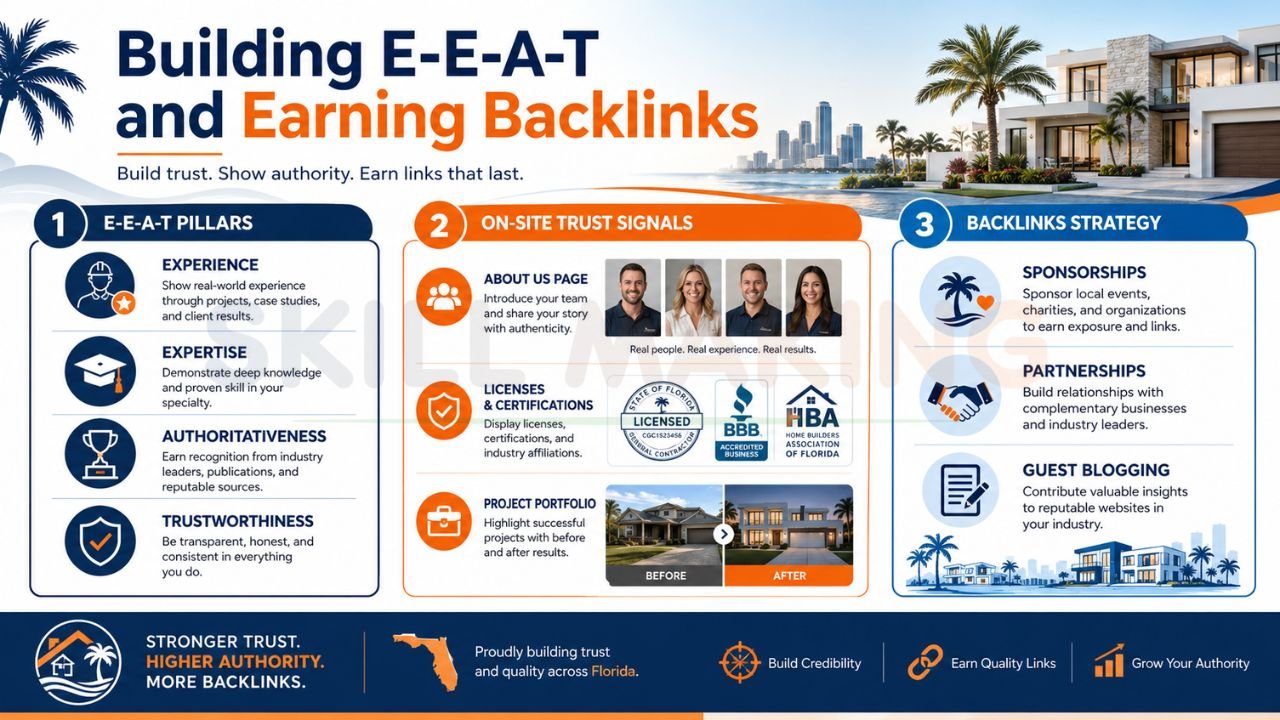
7. Building E-E-A-T and Earning Backlinks
Google wants to send its users to trustworthy businesses. They measure this using a concept called E-E-A-T: Experience, Expertise, Authoritativeness, and Trustworthiness. For a brand-new website, you need to prove you are a real, credible Florida business from day one.
On-Site Trust Signals
You have to build trust into the very design of your website.
- A Real ‘About Us’ Page: Don’t just paste a generic mission statement. Show photos of your crew, talk about how long you’ve been in the Florida construction industry, and tell your story.
- Show Your Licenses: Display your Florida state license numbers, your insurance details, and any awards you’ve won right in the footer of your website.
- Detailed Portfolios: Show off your work! Use high-quality before-and-after photos.
When we handle remodeling website design & development, we make sure your project portfolios are front and center. Visual proof is exactly what homeowners want to see before they request a quote.
Backlinks: Building Authority
A backlink is a link from another website pointing back to yours. Think of it as a vote of confidence. Because your site is new, you have zero algorithmic authority. You need to build high-quality local backlinks.
- Sponsor a local Little League team or a Florida charity event and get a link from their website.
- Ask your building material suppliers or trade partners to link to you.
- Write guest posts for local real estate blogs sharing your construction expertise.
👉 Turn Your Website into a Lead-Generating Machine – 📲 Contact: +917906334941
8. Web Design Features That Convert Traffic into Leads
Getting traffic to your site is only half the battle. If your website is hard to use, visitors will bounce. Your site needs to be a 24/7 lead generation engine.
- Sticky Click-to-Call Buttons: Your phone number should be highly visible at the top of the screen at all times, especially on mobile devices.
- Simple Contact Forms: Don’t ask for their life story. Just ask for their name, phone number, email, and what type of project they need help with.
- Clear Calls-to-Action (CTAs): Tell the user exactly what to do next. Use bold buttons that say “Get a Free Estimate” or “Schedule Your Inspection Today”.
For example, when creating the best HVAC website designs for Florida contractors, we prioritize emergency repair forms and clear service area maps. If a homeowner’s AC breaks in July, they don’t want to read a novel; they want to click a button and get someone to their house immediately.
The Skill Making Advantage
Setting up a flawless technical architecture, mastering local SEO, optimizing for AI engines, and designing a beautiful site that converts is a full-time job. You should be out in the field managing projects and growing your business, not fighting with website code.
At Skill Making, we handle all of this for you. Our website design for roofing contractors and other trades integrates every single 2026 SEO requirement right out of the gate. We build fast, mobile-friendly sites with integrated lead capture forms, bulletproof technical SEO, and perfectly optimized Google Business Profiles.
Tracking Your Success
Once your site is live, how do you know if it’s working? You track the metrics that actually matter. Don’t just obsess over rankings. Track how many people are filling out your contact forms. Track how many people are clicking the “Call Now” button on your mobile site. Use Google Search Console to see what keywords are bringing people in, and double down on the content that is working.
Frequently Asked Questions (FAQ)
- How long does it take for a new construction website to rank on Google? With a technically sound website and strong local SEO, you can start seeing movement for specific local keywords in a few weeks. However, dominating highly competitive terms usually takes 3 to 6 months of consistent effort.
- Should I create a separate page for every city I serve in Florida? Yes, but you must be careful. You can’t just copy and paste the same text and change the city name. You need to create unique, high-quality pages for your main service areas, featuring local photos and specific reviews from that city.
- Can I do my own SEO for my construction company? You can definitely handle the basics, like getting reviews and updating your Google Business Profile photos. But the technical side—like site speed optimization, schema markup, and backlink building—is highly complex in 2026. Partnering with an expert agency like Skill Making ensures it’s done right.
- What is the biggest SEO mistake contractors make? Dumping all of their services onto one single page and ignoring their mobile design. You need dedicated pages for each service, and your site must load instantly on a smartphone.
- How do reviews actually help my SEO? Reviews prove to Google that you are a real, trusted business. The total number of reviews, how consistently you get them, and the specific keywords your customers use in them all directly boost your ranking in the local Map Pack.
Final Thoughts: Ready to Launch Your SEO-Optimized Website?
Launching a new website for your construction business is one of the most exciting steps you can take. But to truly succeed in 2026, you can’t just throw up a digital brochure and hope for the best.
By following this checklist, you are building a digital machine. From nailing down your technical foundation and crushing your Core Web Vitals, to optimizing for AI search engines and dominating the local Map Pack—every step is designed to make you the undeniable authority in your local Florida market. When you combine lightning-fast design with hyper-targeted content and real trust signals, your website transforms into a 24/7 sales rep that never sleeps.
Ready to launch a new website that meets all the SEO requirements and starts generating leads right away? Call or WhatsApp Skill Making right now at https://wa.me/917906334941 or email us at mailto:info@skillmaking.com — we’d love to help you dominate local search in Florida!