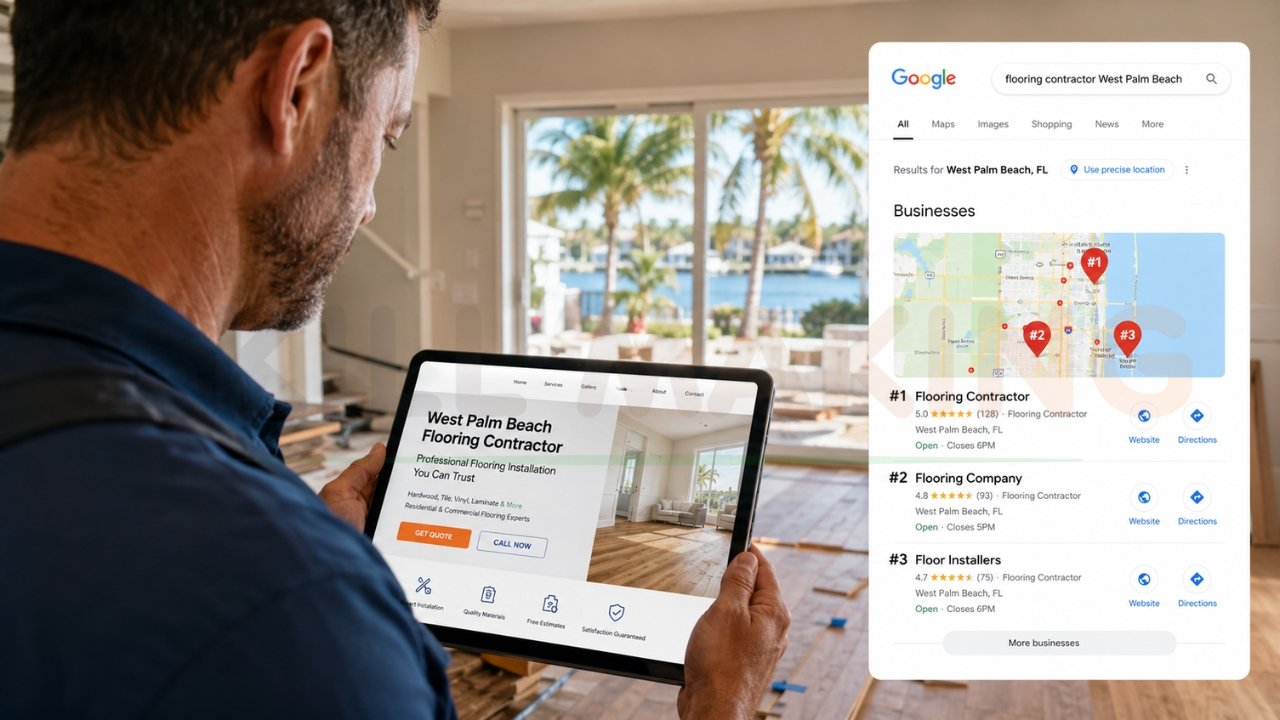
Imagine you are a homeowner in Orlando, Florida, searching for a local roofing contractor after a major storm. You find a promising company through a Google search, but when you click the link, all you see is a white screen with the text: “Website Under Construction. Please check back soon.
What is your next move? Do you wait for them to finish their digital renovations, or do you click the “Back” button and call the next contractor on the list?
👉 Launch a Fully Functional Business Website Instead of Showing “Coming Soon” – 📲 Start Chat Now
In 2026, the answer is almost always the latter. Statistics show that roughly 75% of users judge a company’s credibility based on its website design. When a potential lead lands on a website under construction, they don’t see a “work in progress”—they see a lack of professionalism, a potential business that has closed down, or a company that isn’t ready for their business.
For construction firms, home improvement contractors, and local service businesses, every minute your site remains “under construction” is a lost opportunity to capture a high-intent lead. In this comprehensive guide, we will break down the under construction website meaning, the hidden costs of using these placeholders, and why modern business owners are shifting toward high-converting “soft launch” strategies instead.
What Is a Website Under Construction? (Clear Definition)
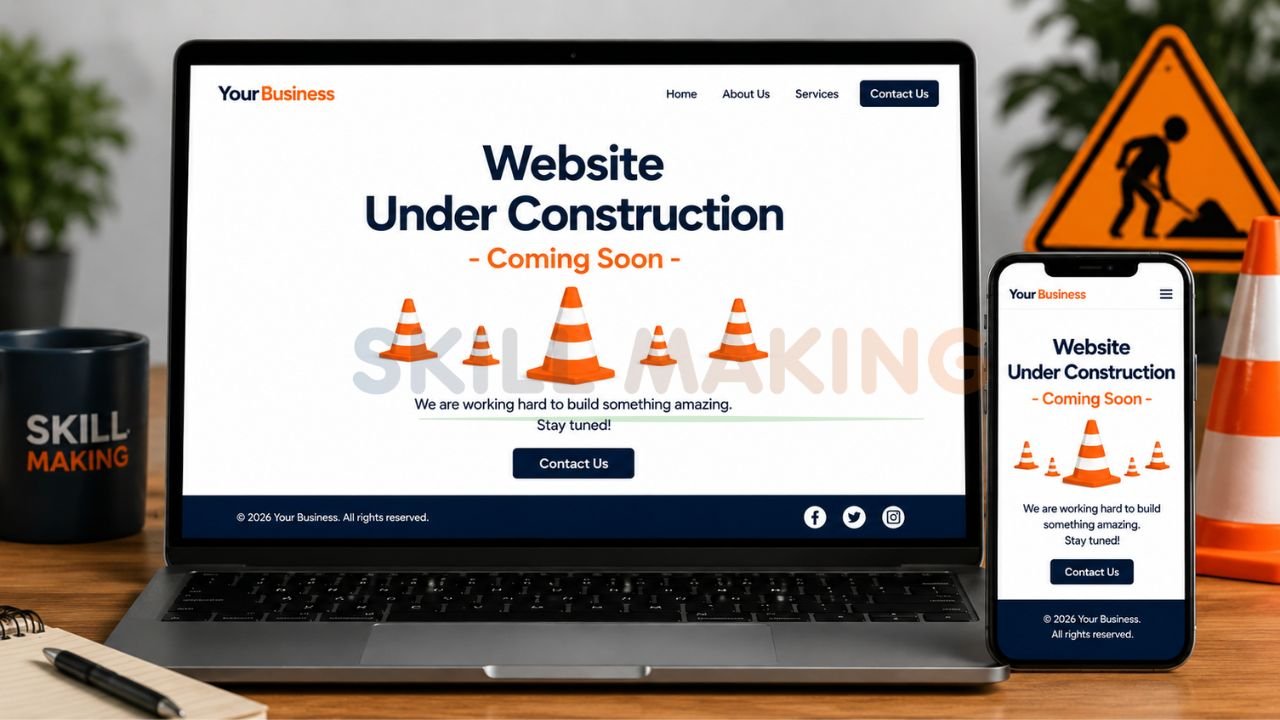
The under construction website meaning is relatively simple: it refers to a temporary landing page placed on a domain when the actual website content is not yet ready for public viewing. It acts as a digital “pardon our dust” sign.
👉 Stop Losing Customers to a “Website Under Construction” Page – 📲 WhatsApp Us Today
Typically, these pages include:
- A brief message stating the site is coming soon.
- The primary keyword “website under construction.”
- Basic contact information (sometimes).
- A simple graphic, such as a construction cone or a progress bar.
While the intent is to prevent users from seeing a broken or incomplete site, a website under construction often acts as a barrier between you and your customers. As the Nielsen Norman Group points out, user experience (UX) is built on trust and accessibility; a placeholder page often fails on both counts.
Why Websites Show “Under Construction” (Common Reasons)?
Business owners use these pages for a variety of reasons, ranging from technical necessity to marketing strategy:
- New Domain Launch: You’ve just registered your business name and want something visible while the development team works in the background.
- Major Rebranding: You are shifting from a general contractor to a specialist in hurricane-resilient building and need to overhaul your entire digital identity.
- Technical Maintenance: You are migrating servers, updating your CMS (like WordPress), or fixing a critical security vulnerability.
- Content Revamp: You’ve realized you were making common marketing mistakes and want to hide your old, low-quality project photos while you wait for a professional photoshoot.
- Avoiding 404 Errors: Instead of showing a “Page Not Found” error, which hurts SEO, owners use a placeholder to keep the URL active.
Pros and Cons of Using a Website Under Construction Page
Using a placeholder is a double-edged sword. While it serves a functional purpose, the long-term impact on your brand can be devastating.
The Pros
- Privacy during development: It allows you to test features without the public seeing bugs.
- Preventing 404s: As mentioned by Moz, keeping a page live (even a simple one) is better than a broken link for crawl accessibility.
- Basic presence: It proves the business exists and owns the domain.
👉 Replace Your Under Construction Website with a High-Converting Lead Generation Website – 📲 Contact Us on WhatsApp
The Cons
- High Bounce Rates: In 2026, users expect instant gratification. An incomplete site leads to an immediate exit.
- Brand Erosion: It looks unprofessional and suggests the business is disorganized.
- SEO Penalties: If the page stays up too long without fresh content, search engines may stop indexing your site effectively.
- Lost Revenue: You cannot capture leads or showcase your craftsmanship through a website under construction.
Comparison: Under Construction Page vs. Fully Functional Website
| Feature | Website Under Construction | Fully Functional Website |
|---|---|---|
| User Trust | Very Low | Very High |
| Lead Generation | Minimal to None | High (via CTAs & Forms) |
| SEO Value | Low (Temporary) | High (Long-term growth) |
| Credibility | Questionable | Professional |
| Conversion Rate | < 1% | 3% – 10%+ |
| Mobile UX | Often Poor | Optimized for all devices |
👉 Get a Professional Website That Builds Trust & Brings Real Customers from Day One – 📲 Message Us Today
Under Construction vs. Coming Soon Page vs. Maintenance Mode
Not all placeholder pages are created equal. Understanding the nuance between these terms is critical for your digital marketing strategy.
1. Coming Soon Page
A coming soon page is a marketing tool. It’s designed to build hype. It usually includes an email opt-in, a countdown timer, and social media links. It tells the world, “Something great is coming, and you should be excited.”
2. Website Under Construction
This is more of a technical placeholder. It’s often used when a site is being actively built but doesn’t necessarily have a firm launch date. It is less about marketing and more about “hiding” the work.
3. Maintenance Mode
Maintenance mode is used for short bursts of time—usually hours, not weeks. It tells search engines to come back later using a “503 Service Unavailable” header, which protects your SEO rankings during short updates.
The Hidden Costs of Keeping Your Website Under Construction
When you leave your site in “construction mode,” you aren’t just pausing your digital presence; you are actively hurting your business.
👉 Turn Your Website from “Under Construction” into a Powerful Sales Machine – 📲 Talk to Experts Now
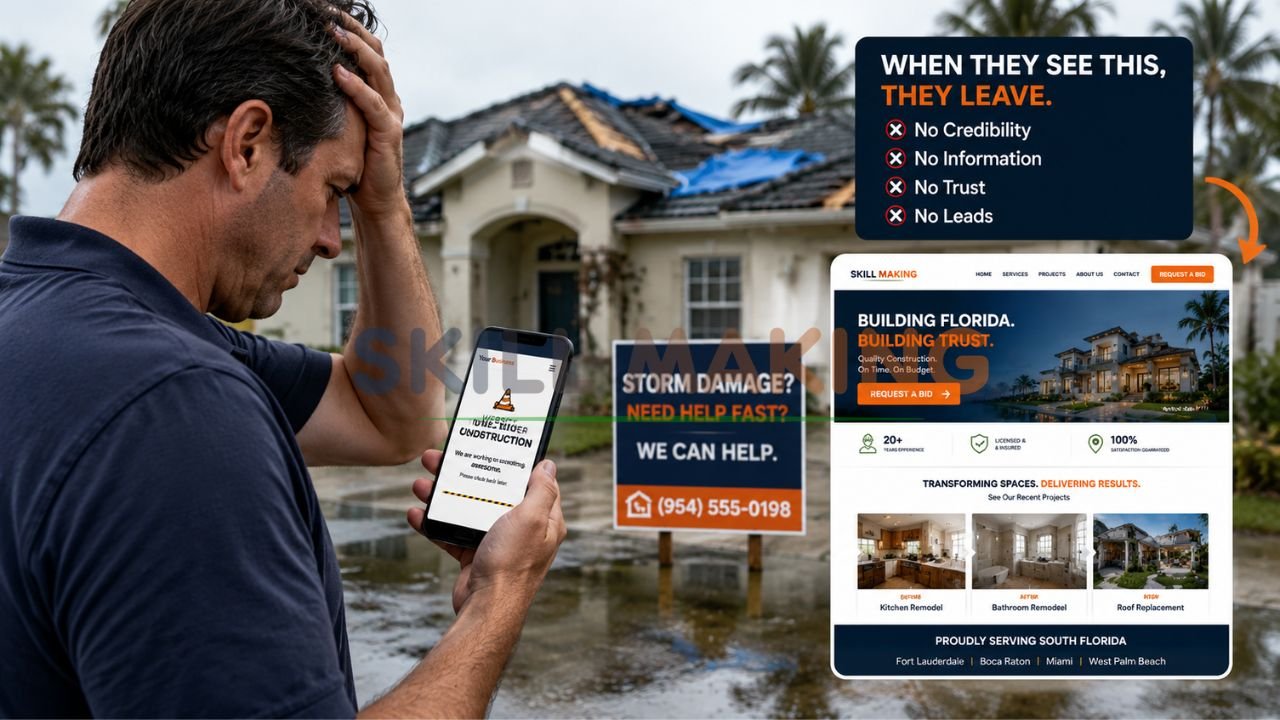
- The Trust Gap: As highlighted in our guide on construction marketing mistakes, homeowners in Florida are wary of “fly-by-night” contractors. A placeholder page reinforces that fear.
- Ad Spend Waste: If you are running Google Local Service Ads but your landing page is “under construction,” you are literally throwing money away. You pay for the click, but the user finds nothing of value.
- Speed to Lead: In the home improvement industry, “speed to lead” is everything. If a client can’t find a “Get a Free Quote” button immediately, they will find one on your competitor’s site.
- SEO Stagnation: Search engines like Google prioritize fresh, relevant content. A static page with the words “website under construction” offers no value to searchers, causing your rankings to plummet.
Best Practices for an Under Construction Page (If You Must Use One)
Sometimes, a brief placeholder is unavoidable. If you find yourself in this position, follow these guidelines from HubSpot and Smashing Magazine to minimize the damage:
- Be Transparent: Give a specific launch date. “Coming Summer 2026” is better than “Coming Soon.”
- Include a Clear CTA: Don’t just say you’re under construction. Say, “We’re busy building Florida’s best homes, but we’re still taking calls! Click here to call us now.”
- Social Proof: Add a few logos of industry associations or a link to your Google Business Profile reviews.
- Collect Emails: Use a lead magnet like “Download our 2026 Home Renovation Checklist” to capture contact info while the main site is down.
- Mobile Optimization: Ensure the page looks great on smartphones, as most local searches happen on the go.
Better Alternatives to a Website Under Construction in 2026
In 2026, the trend has shifted away from placeholders and toward Micro-Sites and Soft Launches. Instead of a “pardon our dust” sign, consider these strategies:
👉 Get a Professional Business Website with SEO, WhatsApp Integration & Lead Capture Forms – 📲 WhatsApp Our Team Now
1. The One-Page Powerhouse
Instead of a multi-page site that is half-finished, launch a high-quality single-page website. It should include your services, a brief “About” section, a gallery of your best work, and a contact form. This allows you to start generating home improvement leads immediately while you build out the rest of the site.
2. The “Soft Launch” Strategy
Publish your core pages first (Home, Contact, Primary Service). Mark the other pages as “In Development” within your menu, or simply don’t link to them yet. This allows Google to start indexing your primary content while you polish the rest.
3. Professional Website Design by Skillmaking
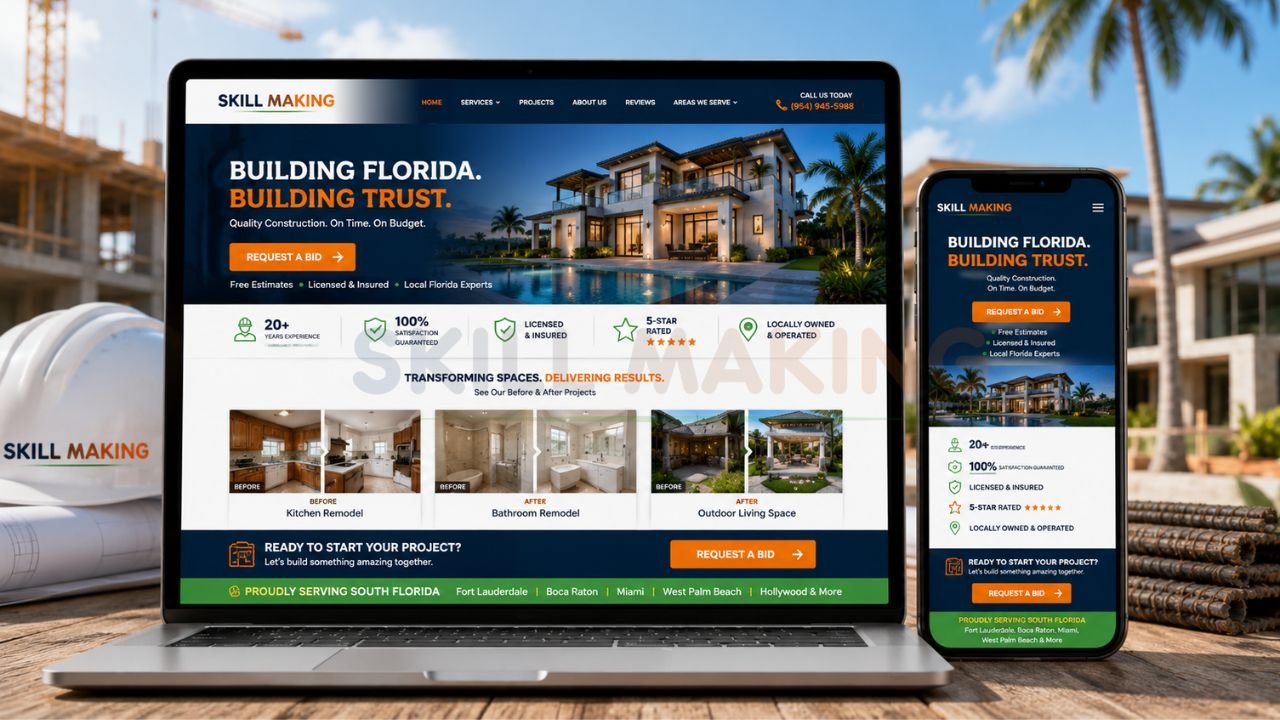
The best alternative to an under construction page is a fully launched, professional website. At Skillmaking, we specialize in helping construction and home improvement companies bridge the “trust gap” with high-converting, bespoke designs. Why settle for a placeholder when you can have a fully launched website instead of an under construction page?
Must-Have Features for a Professional Business Website
To remain competitive in the 2026 Florida market, your site needs to be more than just “finished.” It needs to be a sales engine. According to the Small Business Administration, digital tools are the backbone of modern small business growth.
Key features include:
- Hyper-Local SEO: Targeted keywords for your specific city (e.g., “Kitchen Remodeling in Miami”).
- Speed & Performance: A site that loads in under 2 seconds to prevent bounces.
- Mobile-First Design: Since over 60% of web traffic is mobile, your “digital site office” must be responsive.
- High-Quality Visuals: Case studies and “Before & After” galleries that prove your craftsmanship.
- Direct Communication: Integrated WhatsApp buttons or “Speed to Lead” contact forms for instant engagement.
👉 Build Your Digital Site Office with a Fully Launched High-Converting Website – 📲 Contact Our Experts
How Skillmaking Helps You Launch a Complete, High-Converting Website?
We understand that you’re an expert at building homes, not websites. That’s why Skillmaking offers a turnkey solution for contractors who are tired of being invisible online.
Instead of leaving your domain in a “website under construction” state for months, we help you:
- Define Your Target Project: We focus on the high-profit leads you actually want.
- Build Your Digital Site Office: We create a professional, mobile-optimized hub that works 24/7.
- Optimize for Conversions: Every element is designed to turn a visitor into a quote request.
- Local Dominance: We ensure you show up in the “Google Local Map Pack” so local customers find you first.
Don’t let a placeholder stall your growth. Get professional website design by Skillmaking and start winning projects today.
Conclusion
In the fast-paced 2026 market, your website is your most important salesperson. A website under construction is essentially a “Closed” sign on your digital front door. While it might feel like a safe way to hide your progress, the reality is that it drives away customers, kills your SEO, and damages your brand’s credibility.
Stop waiting for the “perfect” moment to launch. Whether you are a general contractor in Miami or a home improvement specialist in Tampa, your customers are looking for you right now. Give them a reason to trust you.
Ready to trade your placeholder for a lead-generating machine? Get a fully launched website instead of an under construction page with Skillmaking. Let us build your digital site office so you can get back to building what matters
Frequently Asked Questions
1. How long is it okay to keep my website under construction?
Ideally, no more than 7 to 14 days. Any longer, and you risk losing potential customers to competitors who have active, professional sites. If your build is taking months, switch to a one-page “Micro-Site” instead.
2. Does a “website under construction” page hurt my SEO?
Yes, if it stays up long-term. Search engines look for content to index. If they only see a placeholder, your site won’t rank for relevant keywords, making you invisible to local searchers.
3. Can I still run ads to an under construction page?
You can, but you shouldn’t. It is a waste of your marketing budget. Users who click an ad expect a solution, not a “coming soon” message. Always drive ad traffic to a functional landing page.
4. What is the difference between “Coming Soon” and “Under Construction”?
“Coming Soon” is generally used for marketing a new brand or product to build anticipation. “Under Construction” is usually a temporary fix during technical updates or site builds.
5. Should I put my phone number on a placeholder page?
Absolutely. This is the most critical element. If a customer finds your domain while you’re building the site, they should still have a way to contact you immediately.
6. What technical status code should my placeholder use?
For short maintenance, use a 503 (Service Unavailable) code. This tells Google the downtime is temporary and not to penalize your rankings.
7. Is WordPress good for building construction websites?
Yes, WordPress is a highly flexible platform used by millions. However, it requires proper optimization and security management to ensure it doesn’t stay “under construction” due to technical hurdles.
8. How can I get my website launched faster?
Partner with a specialist like Skillmaking. We focus specifically on the construction industry, meaning we have the templates, strategies, and industry knowledge to get you live and generating leads quickly.